Mission MA module intensives at Redcliffe College this year

Redcliffe College MA programmesRedcliffe’s MA in Bible and Mission is one of a number of postgraduate Master’s degrees we are running here at the college. We also have programmes in:

MA in Global Leadership in Intercultural Contexts
MA in Global Issues in Contemporary Mission
MA in Intercultural Studies in Asian Contexts
MA in European Mission and Intercultural Christianity
MA in Member Care
MA in Sport and Christian Outreach (in conjunction with the University of Gloucestershire)

The modules for these MAs are taught in intensive bursts throughout the year. To give you a flavour of what’s on offer, here is a list of planned dates and modules. Check out the links on each course above to see which modules are available on which programmes.

7-10 Oct and 9-12 Dec 2011
Method and content in missiological study

18-20 Oct and 15-17 Nov 2011
Reading the Bible missionally
An introduction to global leadership
Intercultural Christianity and the European Regions
The greening of mission

7-9 Feb and 20-22 March 2012
Theology of religions
Prosperity theology and suffering
Organisational development and cultural change
Just mission – justice issues in intercultural contexts (subject to validation by University of Gloucestershire)

2-5 Mar and 11-14 May 2012
The mission of the Church in the context of post-colonialism and globalisation
Crucial Issues in European mission and theology
Crucial issues in Asian mission and theology

30 April – 18 May 2012 (Summer school)
Bible engagement in intercultural contexts
Method and content in missiological study
The greening of mission
Crucial Issues in European mission and theology
Crucial issues in Asian mission and theology
The mission worker as a person: Building life-skills and interpersonal skills
The member care worker: Equipping self and others

The Bible and trends in Europe today

2012 European Consultation: Trends in Europe todayEvery year Redcliffe College hosts a consultation on mission in Europe. The next one, which is organised by Global Connections, ECM and Redcliffe, is in January and is focused on the theme of Trends in Europe Today.

I’ll be offering some biblical reflection toward the end of the programme. If you are interested or engaged in mission in a European context do come along.

Redcliffe’s European specialism is embodied in the work of our Nova Research Centre.

There is info about the consultation below from Redcliffe’s website. .

2012 European Consultation: Trends in Europe Today

Wednesday 4 to Thursday 5 January 2012

It isn’t easy to find people who love Jesus in Europe today. Only in the Middle East are you less likely to meet people who follow Christ. This is a sad statement to make about Europe, whose skylines are littered with steeples.

Nonetheless God has called many churches and mission organisations to say “This isn’t good enough! We want God to be glorified in Europe too!”. But it isn’t always easy to work in today’s most secular continent.

Organised by Global Connections, ECM and Redcliffe College, this consultation is designed to help stimulate your thinking about some of the trends we are facing in Europe today. Experienced missional thinkers and practitioners will deal with the challenges of Migration, Urbanisation and Islam.

As with previous consultations this is a unique chance to network with other leaders involved in Europe with its many unique and changing facets, to share information on current activities, focus and aims, as well as future plans and dreams.

Speakers include:

Robert Calvert (Urbanisation), formerly of Scotland, currently pastors a church in Rotterdam. It is made up of people from more than forty nations and the team of elders is drawn from four continents.

Alessia Passarelli (Migration) consults for the Churches’ Commission for Migrants in Europe (Brussels) while also doing PhD research into the relationships between migration and churches in Italy and the Republic of Ireland

Bert de Ruiter (Islam) speaks on issues related to Christian-Muslim relations and has developed a course called Sharing Lives to help Christians overcome their fear and share their lives with Muslims.

Tony Peck (Church response) is General Secretary of the European Baptist Federation and an Associate Secretary of the Baptist World Alliance.

Chris Wigram (Mission organisation response) is International Director of European Christian Mission, which works in 18 European countries.

Tim Davy (Biblical reflection) is Director of the Centre for the Study of Bible and Mission at Redcliffe College, and lecturer in Biblical Studies and Mission

Ian Nicholson (Prayer) works with 24/7 Prayer.

The consultation will be held from 12 noon on 4th January through 2pm on 5th January 2012 at Redcliffe College.

Directions to Redcliffe College

Cost

Until 31 October 2011 the cost is £75, which includes an early booking discount.
From 1 November to 23 December 2011 (the booking deadline) the cost is £85.
This will cover food and accommodation, including lunch and dinner on 4th January, and breakfast and lunch on 5th January.

To book

You can download the booking form here, or book online via the Global Connections website
If you have any other queries relating to booking for this event, please contact Evan Winter.

Psalms and the missional formation of the Church

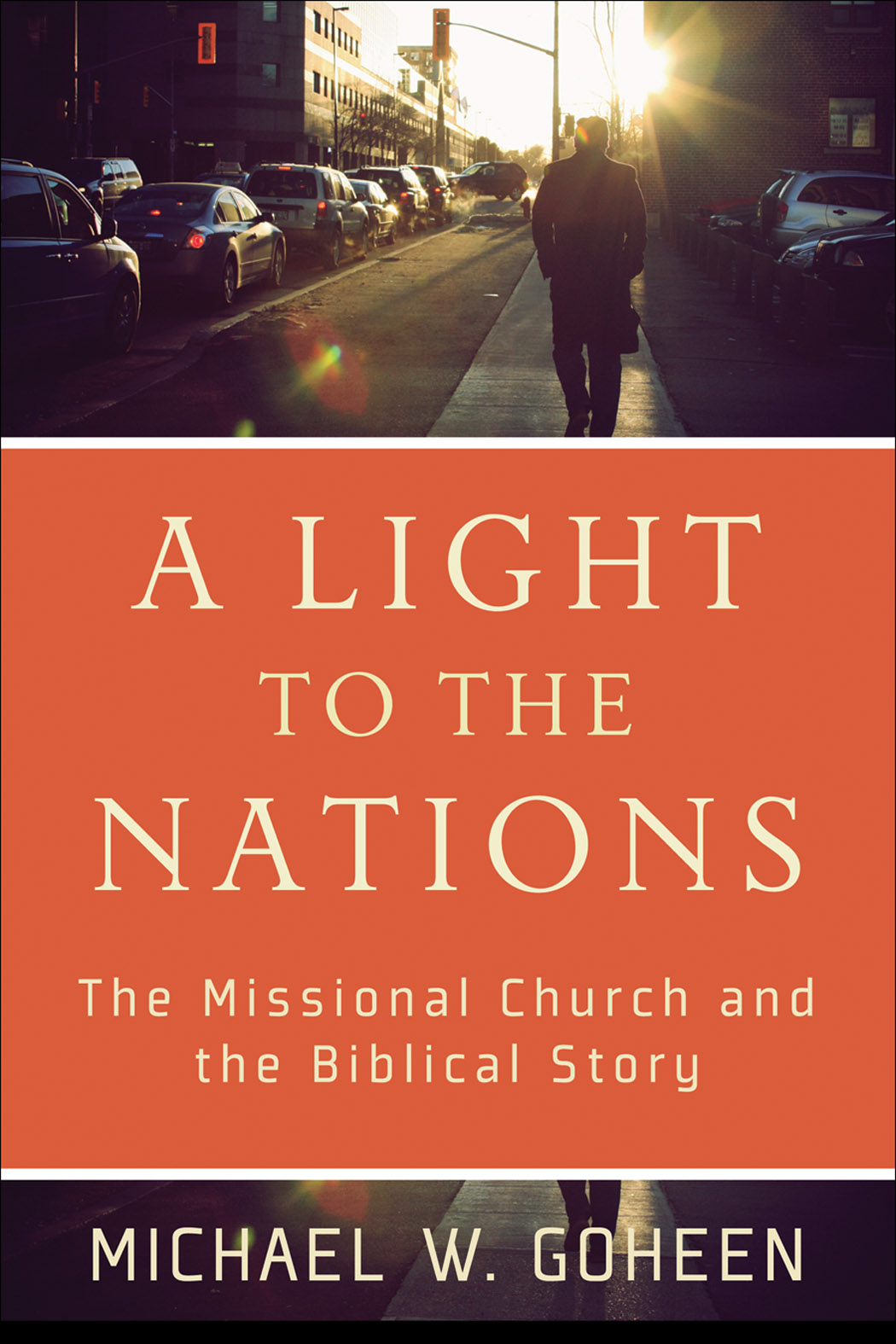
A Light to the Nations by Michael GoheenI’m really enjoying Michael Goheen’s book,  A Light to the Nations: The Missional Church and the Biblical Story. Here’s a nice quote on the relationship between the Psalms and the formation of the people of God, and how this relates to our engagement in God’s mission:

We get a glimpse of the richness of Israel’s worship when we read Israel’s temple hymnbook – the psalms, which prompt the people to thanksgiving, wisdom, commitment, repentance, joy, and obedience. The psalms nourish faithfulness in all its dimensions, so that Israel might be an attractive display people. Israel’s worship and liturgy also creates an alternative worldview to that of its pagan neighbors, opening up a very different way of seeing and living in the world. It offers an unclouded vision of the world in which the one true God, Israel’s God, is creator of all things, ruler of nature and history, and merciful savior. Rodney Clapp captures this perspective on worship in the title of his chapter on the church’s worship: “Welcome to the real world.” In the midst of the land, before the nations, Israel’s worship celebrates the one true God and his mighty deeds in history. What Paul Jones says about the church is certainly first true of Israel: “Inasmuch as the Church is anchored in the gracious acts of God, corporate worship sustains and transmits Christian identity formation.” And so in these ways Israel’s identity and self-understanding, its role and calling in the midst of the nations, are constantly celebrated and nourished by its liturgy. (pp.57-58)

One question that arises for me is, ‘In what ways are we celebrating and nourishing our role and calling in the midst of the nations?’

What do you think?

PS. If you are interested in the relationship between the Psalter and the mission of God, have a look at the June 2010 issue of Encounters Mission Journal, which was on the theme of The Psalms and Mission. It features the following articles:

  • Editorial:  The Centre for the Study of Bible and Mission.
    (Tim Davy, 761 words, pdf 54 KB)
  • Article 1:  The Nations in the Psalms.
    (Prof Gordon Wenham, 5513 words, pdf 65 KB)
  • Article 2:  The Nations in the Psalms and the Psalms in the Nations – a response.
    (Tim Davy, 912 words, pdf 51 KB)
  • Article 3:  Psalms 1-2 as an Introduction to Reading the Psalms Missionally.
    (Dr Brian Russell, 2083 words, pdf 51 KB)
  • Article 4:  Reflections on the Nations in the Psalms.
    (Eddie Arthur, 485 words, pdf 23 KB)
  • Article 5:  The Nations in Isaiah 40-55.
    (Rev Dr David Spriggs, 1218 words, pdf 37 KB)
  • Article 6:  Missionary Attrition and the Psalms of Lament.
    (Name withheld, 1041 words, pdf 41 KB)
  • Article 7:  A Missional Reading of Psalm 47.
    (Tony Hughes, 1664 words, pdf 48 KB)
  • Article 8:  Praying the Psalms.
    (Rev Dr Ian Stackhouse, 2598 words, pdf 59 KB)


  • Book Review 1:  Transformation after Lausanne: Radical Evangelical Mission in Global-local Perspective.
    (by Al Tizon; Regnum Books)
  • Book Review 2:  Understanding and Using the Bible.
    (edited by Christopher J.H. Wright and Jonathan Lamb; SPCK)


You are God’s shop window

mission-net is a pan-European mission congress for young people taking place at the end of 2011 in Germany.

I recently contributed a short article called You are God’s shop window! on the mission-net website, which aimed to encourage readers to live out the missional life that God requires of us. Here’s an extract:

Israel were to be a kingdom of priests and a holy nation. They were supposed to show the rest of the world what it was like to live in covenant relationship with God.

Israel’s lifestyle was missional – it was like a shop window for the world to look through. The nations were supposed to look at the quality of Israel’s life together and think, ‘Wow! Look at them; we want to know their God!’ (see, for example, Isaiah 2:1-5).

What about you and your Christian community? What is your ‘window’ like? When people see your life or your life together to they think, ‘Wow! I really want to get to know Jesus!’?

mission-net is a fantastic gathering. It was at a previous incarnation of mission-net (a TEMA confress) that I came to faith.

If you live in Europe, why not take your youth group along?

Defining missional

A Light to the Nations by Michael Goheen

‘Mission’, ‘missionary’, ‘missional’. I can imagine that if I taught at an art college I’d spend a lot of time asking students, ‘what is art?’. Well, teaching at Redcliffe College, one of only two specifically mission-training colleges in the UK, causes me to ask the ‘mission’ question of myself and students on a regular basis.

I’ve been reading Michael Goheen‘s new book, A Light to the Nations: The Missional Church and the Biblical Story. Here’s how he

approaches the term ‘missional’:

The employment of the term “missional” includes the superficial along with the profound, the culturally captive alongside the richly biblical. But the popularity of “missional” language suggests that something has struck a chord with many Christians…

At its best, “missional” describes not a special activity of the church but the very essence and identity of the church as it takes up its role in God’s story in the context of its culture and participates in God’s mission to the world. This book is an attempt to describe “mission” as the role and identity of the church in the context of the biblical story.

So, Goheen is saying that whatever activities we may label as ‘missional’ are all secondary and subsidiary to the missional identity of the church in our participation in God’s mission.

Bible Engagement and Oral Culture part 2

Translating the Bible into ActionThe theme of orality is one I return to again and again, especially over the summer with our MA module in ‘Bible Engagement in Intercultural Contexts’ and a forthcoming new undergraduate module called, ‘Story, Song and Social Networks: Bible Engagement and Oral Culture’.

We are also developing the Resources section of this microsite to include a whole section on the Bible and orality. There you will find links to websites, journal articles, books, etc. on the subject. Let us know if you find anything we’ve missed!

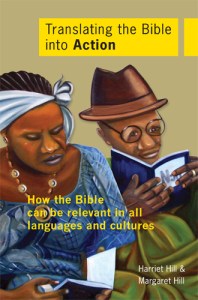
In the meantime, here is a quote from Hill and Hill in their book, Translating the Bible into Action: How the Bible can be Relevant in All Languages and Cultures

(for context, this is part of a section entitles ‘General barriers to engaging with Scripture’)

A. Literacy barrier

Printed Scriptures are effective when people know how to read and like to do so. But many people prefer to communicate using oral rather than written means, or they don’t know how to read. Even if literacy classes were available, people may not be interested in attending them. In some cases, those who do learn to read may still prefer oral means of communication, and soon lose their new skills. In other cases, people may want to learn to read but they are hindered by poor eyesight or other problems. If Scripture is only presented in written form to people who do not know how to read or like to read, this is a serious barrier. (pp. 3-4)

They then refer to five chapters in the book that deal particularly with this topic:

ch. 2  Using appropriate Scripture Products
ch. 16  Bible Storying
ch. 22  Engaging People with Scripture through Music
ch. 23  Engaging People with Scripture through Drama
ch. 24  Engaging People with Scripture through the Visual Arts

Mission and Genesis 1-11

The first part of Genesis (indeed, of the Bible!) is often neglected in Bible and mission writings. Is Gen. 1-11 merely a backdrop or prelude to Abraham’s call which is when the story of God’s mission really gets going in Gen. 12?

There are writers who do reflect on Gen. 1-11 missiologically (e.g., Ida Glaser in her book The Bible and Other Faiths or Brian Russell in his blog, to name just two). While taking a look at the website for Review and Expositor journal today I came across an issue from 2006 on Genesis 1-11 which features a couple of interesting looking articles, which will provoke thought, sympathy and disagreement: Bible and Mission MA students take note!

Missiological Thoughts Prompted by Genesis 10 by Isam Ballenger
Abstract:
The table of nations, Genesis 10, represents the post-history of Noah and his family with the fulfillment of the command given to be fruitful and multiply and the prehistory of Abraham and his family who are to bless all peoples on earth. Fulfillment, rather than a culmination, appears to be preparatory for what is yet to come; history appears to be prologue, attesting to the sovereignty and love of God and claiming time as an integral factor for mission. The peoples of this chapter are not without a relationship to God, raising the question about the relationship of all nonchosen peoples to God. Assuming God initiates relationships, i.e., mission occurs first in God, relationship assumes new dimensions, becomes more inclusive, less individualistic, and thus more demanding of the disciple of Jesus Christ.

God Came Down . . . and God Scattered: Acts of Punishment and Acts of Grace? by Nancy deClaissé-Walford
Abstract:
Throughout the stories in Genesis’ primeval prologue, humankind’s persistent sinfulness is met with punishment but also with acts of grace on the part of God. The last story, the Tower of Babel is usually understood as the ultimate act of disobedience on the part of humanity. In this interpretation, God punishes the people by scattering them over the face of the earth. There is no act of grace. Thus the primeval prologue ends in darkness; God moves to “Plan B” and decides to reveal Godself to humanity through a single family, that of Abram ben Terah. But what if we understood the scattering at the Tower as an act, not of punishment, but of grace on the part of God—an act that allowed humankind to fulfill the creation command to “be fruitful and multiply and fill the earth” (Gen 1:28)? How might that inform and affect our reading of the primeval prologue and the ancestral stories?

Eddie Arthur on The Radical Result of Bible Translation

Words for Life - Summer 2011 issueWords for Life is Wycliffe Bible Translators’ regular magazine. In the Summer 2011 issue Eddie Arthur tackles the subject of  ‘The Radical Result of Bible Translation’. In a short but insightful article he somehow manages to address a whole range of issues, including: the scary nature of giving someone a Bible; mission and coercion; the Bible and politics; language development and dignity; marginalisation, empowerment and identity.

Here’s some of the text of the article to give you a flavour. You can view the whole thing here: Words for Life – Summer 2011

Far from destroying dignity and oppressing them, Bible translation and language development work helps to give people a new sense of their value before God and amongst the nations. Bilingual education programmes give people a sense of value for their own languages and culture while providing them with a bridge to the wider world through the use of national and international languages. For many marginalised groups, who may well be ignored by their national governments, a language and translation programme may represent the only hope for education and development in their area. The work of Wycliffe Bible Translators and its partner organisations isn’t some sort of luxury; it is a vital part of bringing education, development and a sense of identity to some of the world’s poorest and most marginalised people.

It is hard for English speakers to understand what it is like to belong to a people group whose language is continually ignored or discriminated against, or to have a language so obscure that even God doesn’t seem to speak it.

Eddie has much more to say on these and other important topics, as our MA in Bible and Mission students discover when he comes to Redcliffe to teach half of the module, ‘Bible Engagement in Intercultural Contexts’.

Check out his blog as well.

The Mission of God Study Bible

Just a heads up about a forthcoming publication (due out in 2012) from Broadman and Holman.

Ed Stetzer has tweeted that he is currently editing essays for a Mission of God Study Bible.  I’m looking forward to finding out more about this project. Andreas Köstenberger notes that he is contributing an essay on ‘The Mission of God in the Old Testament’. I don’t know anything else about the content other than that, though it could go in a number of directions I suppose.

I’ll post every now and then when I find out more. In the meantime, check out Ed Stetzer’s twitter account @edstetzer, which has lots of mission-related stuff.

Listen free to A Passion for Mission talks

A Passion for MissionGlobal Connections hold an annual event for UK churches and mission agencies called A Passion for Mission. This year’s event was held in London last month and it focused on the Cape Town Commitment, thinking through what it means for the UK church. Chris Wright was the main speaker, along with responses from Rob Hay (Principal at Redcliffe), Rita Rimkiene and Peter Oyugi (both Redcliffe graduates). Rene Padilla also shared his own inspiring perspective.

Global Connections have made the talks from this and previous years available online, listed below. To listen to or download the talks visit Global Connections’ website

A Passion for Mission 2011 – Chris Wright – Ears to Hear (23740kb)
A Passion for Mission 2011 – Peter Oyugi – Ears to Hear (3185kb)
A Passion for Mission 2011 – Rita Rimkiene – Ears to Hear (8187kb)
A Passion for Mission 2011 – Rob Hay – Ears to Hear (7085kb)
A Passion for Mission 2011 – Rene Padilla – Ears to Hear (812kb)
A Passion for Mission 2010 – Joel Edwards – Just Mission (13719kb)
A Passion for Mission 2009 – Kenneth Brockley – Understanding Contextualisation (125kb)
A Passion for Mission 2009 – Ram Gidoomal – Credible Conversion (20541kb)
A Passion for Mission 2009 – Bryan Knell – Credible Conversion (6660kb)
A Passion for Mission 2009 – Ray Porter – Credible Conversion (11131kb)
A Passion for Mission 2009 – Kumar Rajagopalan – Credible Conversion (12489kb)
A Passion for Mission 2009 – Panel Discussion – Credible Conversion (8343kb)
A Passion for Mission 2009 – Howard Norrish – Credible Conversion (18624kb)
A Passion for Mission 2009 – Testimonies – Credible Conversion (9323kb)
A Passion for Mission 2008 – Lindsay Brown – Shining Like Stars (11425kb)
A Passion for Mission 2008 – Dave Bookless 1 – Mission and the Environment (4631kb)
A Passion for Mission 2008 – Ruth Valerio – Mission and the Environment (5422kb)
A Passion for Mission 2008 – Ruth Valerio handouts (204kb)
A Passion for Mission 2008 – Sian Hawkins – Mission and the Environment (4730kb)
A Passion for Mission 2008 – Dave Bookless 2 – Mission and the Environment (3899kb)
A Passion for Mission 2007 – Chris Neal – Partnership in Mission (8220kb)
A Passion for Mission 2006 – John Piper – Let the Nations be Glad (8154kb)