 As well as teaching on specific biblical modules at Redcliffe, occasionally I join other classes for one-off sessions looking how an aspect of the biblical material relates to their subject. The most recent class like this was on Friday when I joined the Diploma and Professional in Mission class on ‘Wealth, Poverty and the Environment’ to look at how the Old Testament addresses the themes of wealth, poverty and power.
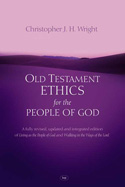
I found Chris Wright’s Old Testament Ethics for the People of God particularly helpful in preparing this session. He outlines the Old Testament’s understanding of poverty in three ways: what causes poverty? how are God’s people to respond to poverty; and a future vision of a new creation without poverty.
We then looked at three passages, Deut. 15 and Job 29, 31. The Deuteronomy passage is well-known for its discussion of how Israel is to approach the issue of poverty. Indeed, in his excellent NIBC commentary on Deuteronomy, Wright (again!) suggests that the passage ‘offers limitless opportunity for ethical and missiological reflection and action’. OK, there is hyperbole in this statement but it is undoubtedly true that the passage (and other parts of Deuteronomy) contains much food for missiological and ethical thought. My own Master’s dissertation was on the orphan, widow and alien in Deuteronomy. A couple of years ago I also had a student here at Redcliffe who wrote her dissertation on the book’s approach to poverty and how that might inform how the church addressed the issue in the contemporary UK context.
The Job passages are more obscure to most, but in an attempt to defend his righteousness Job provides us indirectly with a window into an ideal ethical life where those with power protect the weak and address injustice. At one point Job claims that ‘The blessing of him who was about to perish came upon me, and I caused the widow’s heart to sing for joy.’ (29:13, ESV)
Wouldn’t that verse make a great epitaph?
 In the latest issue of
 In his recently published International Study Guide on
  Each year the Centre for the Study of Bible and Mission invites a visiting scholar to spend some time at Redcliffe, contributing to the activities of the Centre. The Bible and Mission Visiting Scholar is usually from a non-Western context and is involved in the life and teaching of the College, as well as engaging in their own research.
 Mission is not just another (albeit important) theme in the Bible. It is not even merely the major theme in the Bible (though I think it is also this). No, the relationship between the Bible and mission is much more fundamental than either of these assertions. As many have said, mission describes the essential character of the Bible:
 Centre for the Study of Bible & Mission