Blog

There can be no biblical mission without biblical ethics

… so says Chris Wright in his The Mission of God (p.358). In a recent Bible and Mission MA class we were discussing the relationship between the ethics of the people of God and their participation in God’s mission. Wright is particularly helpful here, not least because his writing on the issue combines his expertise in both biblical ethics (his PhD was on OT ethics) and mission.

In one section he very helpfully depicts the flow of logic from election to ethics to mission (p.369):

Who is Abraham?
The one whom God has chosen and come to know in personal friendship (election)

Why did God choose Abraham?
To initiate a people who would be commited to the way of the Lord and his righteousness and justice, in a world going the way of Sodom (ethics)

For what purpose should the people of Abraham live according to that high ethical standard?
So that God can fulfill his mission of bringing blessing to the nations (mission).

How often to do talk about ethics or Christian behaviour from this missional perspective? What reasons to be holy do we focus on normally? ‘Be holy because God is holy’: absolutely – this is foundational (Lev. 19:2; 1 Pet. 1:16)! But I rarely consider my holiness in relation to my participation in God’s mission.

How might grasping the missional nature of holiness transform us as individuals and as communities?

Bible and Mission Visiting Scholar coming to Redcliffe

Lim Kar YongEach year the Centre for the Study of Bible and Mission invites a visiting scholar to spend some time at Redcliffe, contributing to the activities of the Centre. The Bible and Mission Visiting Scholar is usually from a non-Western context and is involved in the life and teaching of the College, as well as engaging in their own research.

This year we are delighted to be welcoming Rev Dr Lim Kar Yong who will be spending a month here at Redcliffe.

Kar Yong is a Lecturer in New Testament and Assistant Director of Postgraduate Studies at Malaysia Theological Seminary. He is the author of The Sufferings of Christ are Abundant in Us” (2 Cor 1:5): A Narrative Dynamics Investigation of Paul’s Sufferings in 2 Corinthians (London: T & T Clark, 2009); “Paul’s Use of Temple Imagery in the Corinthian Correspondence: The Creation of Christian Identity,” in Kathy Ehrensperger and J. Brian Tucker, eds., Reading Paul in Context: Explorations in Identity Formation (London: T & T Clark, 2010; and “Is There A Place For Suffering In Mission? Perspectives from Paul’s Sufferings in 2 Corinthians,” in Dr Tan Kang San (ed.), The Soul of Mission: Perspectives on Christian Leadership, Spirituality and Mission in East Asia (Petaling Jaya: Pustaka Sufes, 2007).

Kar Yong will be spending a month at Redcliffe contributing to a number areas of College life and learning, as well as working on his next book:

“I am looking forward to my time at Redcliffe, not only to carry out my research but also to interact with and learn from both the faculty and student community who have such diverse experiences from all over the world. I know that I will certainly be enriched from my experience at Redcliffe.” (Kar Yong)

New Testament theology is essentially missionary theology

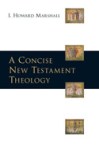
A Concise New Testament Theology by I. Howard MarshallMission is not just another (albeit important) theme in the Bible. It is not even merely the major theme in the Bible (though I think it is also this). No, the relationship between the Bible and mission is much more fundamental than either of these assertions. As many have said, mission describes the essential character of the Bible:

the Bible does not just talk about missional things; it is itself missional.

This is the claim of Howard Marshall in his New Testament Theology: Many Witnesses, One Gospel. I quote here from A Concise New Testament Theology, which is an abridgement of the much larger work. It’s a lengthy quote but well worth reproducing in its entirety (his italics):

Mission and Theology

The focus of the New Testament writings is to be found in their presentation of Jesus as the Savior and Lord sent by God, through whom he is acting to bring salvation to the world. More specifically, they are the documents of a mission. The subject matter is not Jesus in himself (or God in himself), but Jesus in his role as Savior and Lord. New Testament theology is essentially missionary theology. The documents came into being as the result of a two-part mission: first, the mission of Jesus’ follwers, called to continue his work by proclaiming him as Lord and Savior and calling people to faith and ongoing commitment to him, as a result of which his church grows. The theology springs out of this movement and is shaped by it, and in turn the theology shapes the continuing mission of the church. The primary function of the documents is thus to testify to the gospel that is proclaimed by Jesus and his followers. Their teaching can be seen as the fuller exposition of that gospel. They are also concerned with the spiritual growth of those who are converted to the Christian faith. They show how the church should be shaped for its mission, and they deal with the problems that form obstacles to the advancement of the mission. In short, people who are called by God to be missionaries are carrying out their calling by the writing of Gospels, Letters and related material. They are concerned to make converts and then to provide for their nurture, to bring new believers to birth and to nourish them to maturity.

Recognition of this missionary character of the documents will help us to see them in true perspective and to interpret them in the light of their intention. The theology of the New Testament is not primarily ecclesiastical or ecclesiological, with a central interest in the church and its life and its structures. Nor is it an exercise in intellectual understanding for its own sake. Recognition of the missionary orientation of the New Testament will lead us to a more dynamic view of the church as the agent of mission instead of the static view that we sometimes have; it will also ward off the danger of seeing New Testament study as a purely academic exercise.

There is a quite helpful classification saying that actions in the New Testament have three aspects: doxological (glorifying God), antagonistic (opposing and overcoming evil) and soteriological (saving the lost). There is a natural tendency to give primacy to the doxological on the grounds that the highest activity of human beings is to glorify God and even what God does is intended to increase his glory. That is correct, but since the glorification of God should be the ultimate aim of all our activity, a focus on glorification may fail to express what is especially characteristic of the New Testament: the specific way in which God is glorified is through mission. The New Testament is primarily about God’s mission and the message associated with it. Similarl, the antagonistic motif is clearly of great importance, in that the powers of evil and death must be overcome if humanity is to be rescued, but this victory is not an end in itself: the triumph of the crucified must be proclaimed to humankind and become a reality for them – through mission. Again, soteriology is understood in a one-sided manner if attention is centered purely on the work of Christ as if it were an end in itself. It is significant that in Paul the fact of reconciliation achieved by the death of Christ and the proclamation of reconciliation by his messengers (leading to the human acceptance of reconciliation) belong together as the two essential and integral parts of God’s saving action (2 Cor 5:18-21).

Granted, Marshall’s focus is on the New Testament. See Chris Wright’s The Mission of God, pp.48-51, for a whole Bible perspective.

Joachim Jeremias on Jesus’ Promise to the Nations

Jeremias was a German scholar writing in the mid-twentieth century whose best-known work is probably his volume on Jesus and the Parables. He write extensively on New Testament matters including a short 1958 work entitled, Jesus’ Promise to the Nations, which aims to investigate the missional dimensions of Jesus’ eschatological sayings. I’ll reproduce here the contents plus Jeremias’ forward and conclusion to give you the idea:

Contents

I. Three important negative conclusions
   a. Jesus pronounce a stern judgement upon the Jewish mission
   b. Jesus forbade his disciples during his lifetime to preach to non-Jews
   c. Jesus limited his own activity to Israel

II. Three important positive conclusions
   a. Jesus removes the idea of vengeance from the eschatological expectation
   b. Jesus promises the Gentiles a share in salvation
   c. The redemptive activity and lordship of Jesus includes the Gentiles

III. The solution to the problem

IV. Conclusion: What about the Mission?


Forward

The present work has a twofold aim. It is in the first place a New Testament study, and secondly an examination of the basis of missionary activity. Following the suggestions of Sundkler, it seeks, first of all, to draw attention to a neglected element in the message of Jesus, and attempts ot show how large a place in the eschatological sayings of Jesus is given to the Old Testament conception of the pilgrimage of the nations to the Mountain of God.
At the same time the author also hopes that this work may have some significance for the inner logic of missionary activity, and for its Biblical basis. There can be no doubt that the exposition of the ‘negative’ element in the first part of this work, enables us to get a clear view of the immense extent of the promise which Jesus held out to the nations. The events of Easter ushered in the dawn of that final day in which the fulfilment of this promise to the nations and to Israel began to take effect. The special glory of the missionary endevour lies in the fact that it is a very palpable part of the final consummation inaugurated at Eater.

Conclusion

What about the Mission?
What conclusions for the modern missionary task may be drawn from the strictly eschatalogical outlook of Jesus? Has it been rendered superfluous by acceptance of the fact that according to the preaching of Jesus it will be by God’s act of power that the Gentiles will be brought in to the Kingdom of God in the final consummation? Far from it. WHat is significant for the missionary task is the realization to which we have been brought, that it is firmly rooted in God’s redemptive activity. In Jesus’ sayings about the Gentiles we find: 1. an unparalleled insistence on humility. Man can do nothing. It is not our preaching that brings about the ingathering of the Gentiles. Even Jesus himself did not make the world Christian, but he died on the Cross. God alone does it all. The fundamental note and inmost core of the message of Jesus, resounding in all his sayings about the Gentiles, is confidence in the reality of God and the vastness of his mercy.
But at the same time the sayings of Jesus about the Gentiles are: 2. a revelation of the overriding importance and value of the missionary task. Easter saw the dawn of the Last Day. The Gentile mission is the beginning of God’s final act in the gathering of the Gentiles. The Gentile mission is God’s own activity. As God’s eschatological activity it is an anticipation of the visible enthronement of the Son of Man, and as such it is ‘the actual sign’ of the period between Easter and the Parousia. The firstfruits of the Gentiles are signs, an earnest of the fulfilment, foretastes of the final consummation. Just as justification, the gist of the Spirit, sonship, the communion of the Lord’s Table, are God’s gracious gifts for the period of waiting for the consummation, so too are the Gentiles whom God brings into the Church of Jesus Christ. The missionary task is part of the final fulfilment, a divine factual demonstration of the exaltation of the Son of Man, an eschatology in process of realization. It offers the possibility of co-operating with God in his gracious anticipation of the decisive hour of redemption described in Isa. 25: the Gentiles accepted as guests at God’s Table (v. 6), the veil torn from their eyes (v. 7), and death abolished for ever (v. 8).

I came across this book thanks to my good friend Richard Johnson, who runs Qoheleth Resources, the second hand theological booksellers. He sends out a weekly sheet with loads of bargains so I’d recommend getting on the mailing list.

King David blogs in the lead up to Psalm 51

As part of Redcliffe’s level two Psalms module students can choose to produce a creative piece with a reflection on the process. Often this involved painting, photography, mosaic, and so on. One student this year is using a blog to imagine what is going through David’s mind in the lead up to writing Psalm 51.
It will only be running for a short time (another couple of weeks max) so please follow and interact with it: David Son of Jesse

What every student should know about writing

What makes for a good piece of writing? What does it take to move from OK to good to excellent? These are questions that I find myself asking frequently, whether in setting assignments, advising students in the process of writing them, or marking the end results.
Of course, like any college, at Redcliffe we have clearly defined grading criteria that we use when assessing pieces of work. But today I came across a succinct and very helpful summary by Ben Myers in a post entitled On writing: thirteen theses:

There are four kinds of writing: bad, mediocre, good, and great. The difference between bad writing and mediocre writing is discipline. The difference between mediocre writing and good writing is editing. The difference between good writing and great writing is miracle.

Myers emphasises perspiration over inspiration (or at least says that you can’t make the most of the latter without the former):

Writing and editing. T. S. Eliot once observed that good writers do not necessarily write better than others, but are better critics and editors. Good writers cull the overpopulated paragraphs of their work. Like a farmer protecting the livestock, the writer lovingly separates whatever is sickly and infirm – and then loads the gun.

Similarly,

The self has a tendency to leak and dribble. Left to itself, it loses all definition, becomes a shapeless puddle. Writing, like ritual, is a cast into which the self is poured. Writing is care of the self. ‘He who would not be frustrate of his hope to write well hereafter in laudable things, ought himself to be a true poem’ (Milton). A book is a few seconds of inspiration plus a few years – or a lifetime – of discipline. You cannot have a campfire without the first spark, but the spark is useless without the slow labour of gathering wood, building the fire, and maintaining it when it begins to die.

My thanks to Alison Lo at LST who passed this on.

Christian Research In Action Network

It’s high time I posted something on the excellent web resource, Christian Research In Action Network, or CRIAN for short.

CRIAN is a network promoted by the Oxford Centre for Mission Studies and has a wealth of useful material on a range of subjects including research methods, reflective practice, missiology, leadership, and more. You have to sign up to join it but this is well worth doing.

For those with an interest in Bible and Mission I would highlight two videos from this year’s Cambridge Summer School of Theology (you will need to be a member of CRIAN for the links to work):

The Bible and Mission lecture by Chris Wright

The Manifesto of Mission lecture by Chris Wright

Tearfund’s Dewi Hughes giving annual Redcliffe lecture on global mission and justice

On Tuesday 9th November from 7pm to 9pm Tearfund’s Theological Adviser Dewi Hughes will be giving the 2010 Redcliffe Lecture in World Christianity on the subject of Global Mission and Justice: With justice deciding for the poor of the earth (Isaiah 11:4)
Here’s the blurb from Redcliffe’s website

With righteousness he will judge the needy, with justice he will give decisions for the poor of the earth Isaiah 11:4 

The role of justice as it relates to global mission is an increasingly important discussion today. It includes justice for persecuted Christians and the poor, environmental issues as well as war and peace and the law. Our understanding of the issues is often tied in with our views on the rule of Jesus as Messiah and nature of the Kingdom of God, as well as end-time theology.

Dewi Hughes, Tearfund’s Theological Adviser will be exploring the theme of Mission and Global Justice when he delivers the 2010 Redcliffe Lecture in World Christianity. In addition to exploring the factors influencing how evangelicals relate to justice, Dewi will examine and assess current movements who are involved in justice issues.

The evening is free, but pre-booking is required.

For booking details please visit Redcliffe’s website

1 Corinthians commentaries on Google books

This semester Redcliffe’s third years on the BA(hons) in Applied Theology can choose a module on 1 Corinthians. We’ll be getting really stuck in to the biblical text over the coming weeks and thinking hard about how the letter relates to our participation in God’s mission today.

Google books has a surprising number of good commentaries available to read. You can’t usually read the whole thing but with the size of some of the volumes, even a limited preview is well worthwhile!

Here are some links:

1-2 Corinthians by Craig Keener (NCBC series)

The First Epistle to the Corinthians by Gordon Fee (NICNT series)

The First Epistle to the Corinthians: a commentary on the Greek text by Anthony Thiselton (NIGNT series)

1 Corinthians: a shorter exegetical and pastoral commentary by Anthony Thiselton

First Corinthians by Richard Hays (Interpretation series)

1 Corinthians by James Dunn (T. & T. CLark Guides series)

1 Corinthians: interpreted by early Christian commentaries by Judith Kovacs

Paul for Everyone: 1 Corinthians by Tom Wright

MA in Bible and Mission begins

Today was the first session in the Reading the Bible Missionally module of Redcliffe’s new postgraduate MA in Bible and Mission.

Students had come prepared by reading the introduction and first two chapters of Chris Wright’s The Mission of God: Unlocking the Bible’s Grand Narrative. As well as discussing the reading we also looked at the developmet of the methodology of missional hermeneutics.

In particular it is noticeable from the literature how ‘missional hermeneutic’ can mean so many different things. This is, perhaps, inevitable with such a newly developing approach, which can of course be frustrating at times. On the other hand, it’s one of the things that makes it all so exciting!

Here are a couple of resources I’ve come across that try to explain the different approaches people have taken (thanks to Brian Russell for making me aware of the first):

Reading the Bible Missionally by Tony Stiff on his blog Sets ‘n’ Service

The Gospel and Our Culture Issue on Missional Hermeneutics on the Gospel and Our Culture website