Michael Gorman on a missional hermeneutic for Paul’s letters

In a Catalyst Online journal article entitled Missional Musings on Paul Michael Gorman offers some some ways to approach Paul’s letters from a missional perspective:

In a Pauline missional hermeneutic, the guiding question is: How do we read Paul for what he says about the missio Dei and about our participation in it? In other words, the issue before us is not primarily exegetical or historical, but hermeneutical. What is a Pauline letter? (a mission document). How are we to read it appropriately? (missionally). Older historical and exegetical questions—e.g., about how and whom Paul evangelized, and whether he expected his communities to do the same—are still relevant, but they will not be our primary concerns, and they are not ends in themselves. Rather, they are part of a larger discussion about Paul and mission. Together with all kinds of new questions that emerge from this enlarged understanding, they serve as a means to our own theological and missiological reflection.

Read the whole article here: Missional Musings on Paul

BMS Mission Catalyst issue on mission and the Bible

Mission Catalyst issue on Mission and the BibleI missed this one when it came out (hooray for archives!), but a 2009 issue of BMS World Mission’s publication, Mission Catalyst focused on the theme of Mission and the Bible. Here’s the contents:

Cover to cover: mission throughout scripture
Mission doesn’t just start at Matthew 28. As Alan Pain explains, God told his people to ‘go’ from Genesis to Jesus – and beyond.

Oral Bible: the greatest story of all
In North Africa, people are coming to faith in Jesus through the mission of OneStory, which shares the Bible in culturally relevant ways. This is an example of that work in action.

New perspectives: mission brings the Bible to life
Four BMS mission workers reflect on how the culture in which they now live has changed the way they approach the Bible.

Bible reflection
The Bible is rich in world mission messages. Rev Sian Murray Williams focuses on one passage – the Journey to Emmaus in Luke 24: 13-35 – and provides a four-point sermon outline.

Click on the link to read the issue on Mission and the Bible

Eugene Peterson on a pastoral reading of Genesis 1 and 2

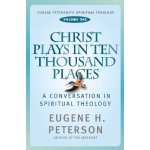
Christ Plays in Ten Thousand Places by Eugene PetersonWhat is Genesis 1 and 2 ‘about’? I love this quote from Eugene Peterson in his Christ Plays in Ten Thousand Places: A conversation in spiritual theology:

I missed the personal immediacy of Genesis 1-2 for a long time. Early on I was distracted by the arguers and polemicists who were primarily interested in how things got started. As an adolescent I got mixed up with friends who loved using these texts to pick fights with evolutionists and atheists. Still later I become intoxicated with the words and images and syntax, comparing and evaluating them in the study of the contrasting but still fascinating worlds represented in the ancient Sumerian and Assyrian, Babylonian and Egyptian civilizations.

Then I became a pastor and gradually realized what powerful texts Genesis 1 and 2 are for dealing with life just as it come to us each day. As pastor my work was to pray and teach and preach the Holy Scriptures into the lives of mothers and fathers raising their children, farmers in their wheat fields, teachers in their classrooms, engineers building bridges, sergeants and captains and colonels keeping watch over our national security, and not a few arthritic octogenarians in nursing homes.

In the course of this work, I’ve come to think that Genesis 1 and 2, prominent as they are in launching us into the grand narrative of the Bible, are among the most under-interpreted and under-used texts for shaping an obedient and reverent life of following Jesus in our daily, ordinary, working and worshiping lives.

My shift from reading Genesis 1-2 primarily as an account of the beginning of all things to reading it as a text for beginning to live right now took place early in my pastoral work. As I was learning how to lead my congregation into an obedient life of worshiping and following Jesus, I was struck by how extensively the cultural and spiritual conditions in which I was working matched the exile conditions of the Hebrews in the sixth century before Christ: the pervasive uprootedness and loss of place, the loss of connection with a tradition of worship, the sense of being immersed in a foreign and idolatrous society. I felt that I and my congregation were starting over every week; there was no moral consensus, no common memory, all of us far removed from where we had grown up. The lives of the parishioners seemed jerky and spasmodic, anxious and hurried, with little sense of place or grounding. When I realized that these were the same exile conditions lived through by the people of God in the sixth century B.C., I started preaching and teaching the exile texts of Isaiah, those great pastoral messages to people who had lost touch with their time and place in the world. In doing that I discovered that one of the most important Isaianic words used with these exiled people was “create.” “Create” is a word that is used in the Bible exclusively with God as the subject. Men and women don’t, can’t, create. But God does. When nothing we can do makes any difference and we are left standing around empty-handed and clueless, we are ready for God to create. When the conditions in which we live seem totally alien to life and salvation, we are reduced to waiting for God to do what only God can do, create. The words “create” and “Creator” occur more times in the exilic preaching of Isaiah than in any other place in the Bible – sixteen times as compared to the six occurrences in the in the great creation narratives of Genesis 1-2. As I pursued this pastoral task, I realized how immediate and powerful, how convincing and life-changing, the creation work of God is among a people who feel so uncreated, so unformed and unfitted for the world in which they find themselves. While under Isaiah’s influence I was moving from my pulpit to hospital rooms and family rooms, coffee shops and community gatherings, praying with and listening to bored or devastated men and women, “create” emerged out of the background of what happened long ago in Canaan and Egypt and Babylon into prominence in my community as an actively gospel word of what God is doing today among the exile people with whom I was living.

After several years of this, I came back to Genesis 1-2 in a fresh way and found in these texts an urgency and freshness and immediacy that surprised me. No longer was I reading Genesis and asking, “What does this mean? How can I use this?” I was asking, “How can I obey this? How can I get in on this?” (pp.63-64)
He executes justice for the fatherless and the widow

So says Deut. 10:18, in the context of a glorious hymn surveying the majesty and power of God. But what does this mean for mission today? Here’s one example of a ministry that is embodying this desire of God to see justice upheld for the weak. For more details visit International Justice Mission’s website.

Also, check out a developing Redcliffe College initiative: JusTice – justice . advocacy . mission

GOCN forum on missional hermeneutics

If you are at the meetings of the Society of Biblical Literature or the American Academy of Religion later this month in San Francisco, check out the GOCN forum on missional hermeneutics. This forum has been critical for the development and dissemination of thinking in the whole area of reading the Bible through the lens of mission (see, for example, the 2009 issue of their enewsletter on missional hermeneutics).

Here is the info on the meetings from the GOCN website:

The annual GOCN forum on missional hermeneutics will be held in San Francisco at the annual meetings of the Society of Biblical Literature and the American Academy of Religion. We will host two sessions.

Session 1
1:00 PM to 3:30 PM
11/19/2011–Golden Gate 6

Reading the Parables of Jesus Missionally

George Hunsberger, Western Theological Seminary, Presiding

Jason S. Sexton, University of St. Andrews
Reading the Parables Theologically to Read them Missionally: A Missional Reading of the Early Galilean Parables in Luke’s Gospel

Lois Barrett, Associated Mennonite Biblical Seminary
Reading Matthew 13 Missionally: Training for the Reign of God

Colin H. Yuckman, United Presbyterian Church of New Kensington
A Shadow of a Magnitude: Reading Luke’s ‘Parables of the Lost’ Missionally

Klyne Snodgrass, North Park University, Respondent
Session 2
4:00 PM to 6:30 PM
11/20/2011– Golden Gate 8

Panel Discussion of Michael J. Gorman’s Reading Revelation Responsibly: Uncivil Worship and Witness: Following the Lamb into the New Creation (Cascade Books, 2011)

Michael Barram, Saint Mary’s College of California, Presiding

Darrell Guder, Princeton Theological Seminary, Panelist
John R. Franke, First Presbyterian Church, Allentown, PA, Panelist
James Brownson, Western Theological Seminary, Panelist
Sylvia Keesmaat, Trinity College – Toronto, Panelist

Michael Gorman, Saint Mary’s Seminary and University, Respondent

Canon and Mission

Have you ever thought about how the Bible is a Missional Book?  If your are a regular visitor to this blog hopefully you have, but what about the actual unity of the canon itself, in its composition, compilation and its organisation?  Dan Beeby in his little book Canon and Mission looks at this specific theme with great insight.  Amongst other things, he questions the reason why the Old Testament ordering is different from that of the original Hebrew Bible.  He notes on page 32,

They took out the center part of the Hebrew scriptures and put it at the end.  The prophets were taken from the middle, from between the Torah and the writings, and put at the end because the prophets were read in the church as prophecies of Jesus Christ and so would have to be put nearest the Gospels.  So we have our Old Testament ending with the forward-looking conclusion of Malachi, and then you come immediately to the Gospels and the coming of Jesus Christ.


So what is the missional significance of this?  This is about seeing the big picture of the Bible.  Often when we come to read or study the Bible we categorise, atomise and dissect  it into chapter and verse or even into specific word studies.  While this is by no means a wrong or ineffective way of studying, do we miss something?  How often do we just read it to remind ourselves of the very fact that we have an inspired book that screams “God can be found and wants to be known”.  The inspired men from centuries past brought together independently written books with their individual agenda’s in such a way that the very flow of the library that is the Bible shows us that God has a mission; he desires to be known.

Translating the Bible into Action in French, Portuguese and English

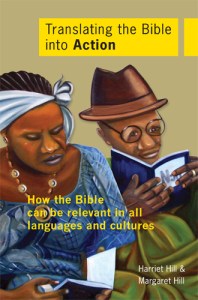
Translating the Bible into ActionOne of the core texts for students at Redcliffe College is Harriet Hill and Margaret Hill’s Translating the Bible into Action: How the Bible can be Relevant in All Languages and Cultures. It is essential reading on two particular modules: Story, Song and Social Networks: Bible Engagement and Oral Culture’ on the BA(Hons) degree in Applied Theology in Intercultural Contexts programme; and ‘Bible Engagement in Intercultural Contexts’ on the MA in Bible and Mission.

The excellent Scripture Engagement website has just announced the translation of Hill and Hill’s book into French, under the title, Traduire la Bible en Actes: Manuel pour faire un bon usage de la Bible dans chaque langue et culture. It is also available in Portuguese: Colocando a Bíblia em Ação: Como tornar a Bíblia relevante para todas as línguas e culturas.

This is a really important and helpful book. Here’s the blurb and contents:

“Clear, simple and readable – very practical, fully supported with further reading … exactly the kind of thing that is needed.” Chris Wright, Langham Partnership

A tried and tested resource that encourages meaningful Bible use in multi-lingual contexts through both written and oral media.

Individual chapters can be used as a standalone interactive workshop in church or mission contexts. Chapters (with further reading) are also appropriate as a text for graduate studies. Includes activities, assignments, further reading resources and links for useful websites.

CONTENTS

1 Barriers to Engaging with Scripture
2 Using Appropriate Scripture Products

Theological Foundations
3 Language in the Plan of God
4 Culture in the Plan of God
5 Mother-Tongue Scripture Use and Church Growth

Multilingual Churches
6 Using Scripture in Multilingual Churches
7 Helping Interpreters Perform Well
8 Multi-Ethnic Churches

Relevant Bible Use
9 Identifying Relevant Issues
10 Providing Necessary Background Information
11 Preparing Bible Studies
12 Addressing Human Concerns: Trauma Healing
13 Addressing Human Concerns: HIV-AIDS and the Church
14 Preparing Sermons
15 Meditating on God’s Word

Sharing Faith
16 Bible Storying
17 Preparing for Good News Encounters
18 Engaging People with Scripture in Evangelism
19 How Muslims Use the Bible
20 Engaging Children and Youth with Scripture
21 Family Prayers

Using Your Gifts
22 Engaging People with Scripture through Music
23 Engaging People with Scripture through Drama
24 Engaging People with Scripture through the Visual Arts

Literacy
25 Mother-tongue Reading and Writing for Literates
26 Basic Literacy and Scripture

Passing It On
27 Research, Marketing, and Distribution
28 How to Bring about Change
29 Preparing for Scripture Engagement Seminars


Mary and Joseph as 21 century teenage parents video

Youth for Christ in the UK have just brought out a video that puts a contemporary spin on an ancient story. Here’s the blurb and video:

A short film looking, from a modern perspective, at how Mary felt when she found out she was carrying the Son of God, Jesus Christ.

This film was produced to accompany the KS3 RE Resource ExploRE by Youth For Christ. For more information, and other videos, please visit http://www.explore-tv.co.uk/

Ross Wagner on the Apostle Paul and the missio Dei

The concept of the missio Dei is foundational for understanding a missional reading of the Bible. We, the church, are involved in mission because we are sent by God to participate in his mission.

Ross Wagner is a New Testament scholar who teaches alongside Darrell Guder at Princeton Theological Seminary. A couple of publications to mention, which I have just added to the Bible and Mission books and articles section of this microsite:

Wagner, R. Heralds of Good News: Paul and Isaiah ‘In Concert’ in the letter to the Romans, Leiden: Brill (2002).

Wagner, ‘Missio Dei: Envisioning an Apostolic Reading of Scripture’, Missiology, 37:1 (January 2009), 19-32.

The first title links to a Google preview. The second was part of an issue of Missiology dedicated to the theme of missio Dei. Here is the abstract to Wagner’s article:

A theological account of the nature and function of Scripture in the church is properly situated within the larger context of the missio Dei, God’s merciful self-communication to the world in Jesus Christ through the power of the Spirit. Exegetical soundings in 2 Corinthian, Philippians, 1 Peter, and 1 John illustrate the fruitfulness of an “apostolic hermeneutic” that attends to the waus in which these texts address and form the church as the community of the reconciled who are called into fellowship with the triune God as active participants in God’s won work of reconciliation. 

A couple of other related links:

Gorman, M. (2011) ‘Missional Musings on Paul‘, Catalyst On-line, 37:2.

Hunsberger, G. ‘Proposals for a Missional Hermeneutic: Mapping a Conversation‘, Gospel and Our Culture Newsletter eSeries, 2 (January 2009). Subsequently published as G. ‘Proposals for a Missional Hermeneutic: Mapping a Conversation’, Missiology, 39:3 (July 2011). This mentions Wagner’s work as part of Hunsberger’s round up of scholarship on missional hermeneutics up to that point (late 2008).

NIV and NLT available for free download with Youversion for 48 hours

YouVersion is a very popular way of reading many versions of the Bible online or on your phone. Normally you need to be connected to the web to access it but they recently announced that you will be able to download for free the NIV and NLT for offline use. There will only be a 48-hour window for this so don’t miss out!

Here’s the blurb from the email:

Some of you have let us know that you lost your offline Bible versions after upgrading or replacing your phone without having offline translations backed up. Most versions in the Bible App are available to download anytime. However, a few are not, so we reached out to our friends at BiblicaZondervan, and Tyndale, and they have graciously allowed us to offer the New International Version (NIV) and the New Living Translation (NLT) for a limited time.

For just 48 hours next weekend—from 12:00 AM October 30 through 11:59 PM Central Time U.S. (GMT -5) October 31—you’ll once again be able to download the NIV and the NLT for offline use. (When you download a version, that means you can read it in the Bible App even when you’re offline—that is, when you can’t connect to your service provider or to the Internet.) Special thanks go to Biblica and Zondervan for making the NIV available, and to Tyndale for the NLT.