Free access to reviews of Chris Wright’s The Mission of God

Chris Wright's The Mission of GodI’ve noticed in the last few days that we have had a lot of hits on a post a I wrote back in February giving links for reviews of Chris Wright’s 2006 work, The Mission of God: Unlocking the Grand Narrative of Scripture.

All the links given there are for freely available, online reviews of the book.

I am inferring from this recent trend that a lot of classes in Bible Colleges, seminaries and other training programmes are starting around now and they have Wright’s important book on the curriculum. This is great news!

While there is a growing body of literature on the missional interpretation (see our Bible and Mission resources section for details), Wright’s The Mission of God is still, I think, the most significant work on the subject and, as such, is essential reading. It is on the reading lists for undergrads and postgrads at Redcliffe and is a core text in the ‘Reading the Bible Missionally’ module on our MA in Bible and Mission programme (indeed we read it cover to cover, alongside other important works).

So, if you are reading The Mission of God in a class this year, whether here at Redcliffe or anywhere else in the world, may you be informed, inspired and changed as a result. May you be more encouraged and engaged in your participation in the mission of God.

P.S. I’d love to know what type of courses are using Wright’s book in different places. Let us know by leaving a comment below.

Henna storying the Bible

Henna and the Gospel image
Image from South Asian Peoples website http://www.go2southasia.org/resource/evangelism/henna/

While looking through the excellent oralstrategies website in preparation for a new module on the Bible and orality I came across an item highlighting the way believers are using henna to communicate the biblical stories. The item linked to the website for South Asian Peoples, which said the following about the ministry:

Henna Storytelling

Henna, a temporary artwork drawn on hands and other parts of the body, is a popular beauty technique in parts of Asia, Africa and the Middle East. Christian women use henna to illustrate Bible stories and share the Gospel in a non-threatening manner.

These pages describe how you can host a henna party in your home or church. Learn how to make henna and draw Bible story illustrations, and how to prepare traditional foods served in henna cultures. Then spend time praying for the women of the world who use henna and the missionaries who serve them.

They highlight links to videos explaining more (see one below), story sets and henna patterns, a guide to making your own henna, and a booklet entitled, ‘Henna and the Gospel’.

Please do check out the website. Even if it is not your thing, or you are unlikely ever to use this particular strategy yourself, just drink in the creativity and be inspired to do something appropriate and imaginative in your own context.

Creation to Christ Henna from South Asia on Vimeo.

We’ll be looking at this fantastic ministry, along with many others, on Redcliffe’s new module, ‘Story, Song and Social Networks: Bible Engagement and Oral Culture’, which is available to final year students on Redcliffe College’s BA(Hons) Degree in Applied Theology in Intercultural Contexts.

Free access to Richard Bauckham on Mission as Hermeneutic for Scriptural Interpretation

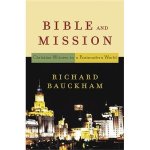
Noted New Testament scholar Richard Bauckham has written two important works on the Bible and Mission. The most developed is his 2003 book Bible and Mission: Christian Witness in a Postmodern World, which I posted about last week: Mission by way of the least in Luke. But prior to this he wrote a short essay entitled ‘Mission as Hermeneutic for Scriptural Interpretation‘, which he has made available on his website, along with a number of other Accessible lectures and essays.

The 1999 essay was presented in Cambridge as a Currents in World Christianity Position Paper. There are some very interesting points, which he expands on in the later book. I ask my students on the Reading the Bible Missionally module of Redcliffe’s MA in Bible and Mission to read both. At some points he differs from people such as Chris Wright, though at others he compliments them well.

Here are a couple of quotes to give you a flavour:

The title that was suggested to me for this lecture could be read in at least two ways, which are certainly not mutually exclusive. One could take it to mean that the church’s practice of mission is a form of scriptural interpretation. The Bible is the sort of text that calls for interpretation not only by means of more text but also by the practice of what it preaches. Could anyone really understand what it means to love enemies without doing it, or at least seeing it done? That the church’s mission in and to the world is the practice of the biblical text in which the text is constantly being interpreted is important, and we shall return to it at the end of the lecture. But it depends, I think, on the other possible meaning of my title. In this case the title refers to a missionary hermeneutic of Scripture, in other words a way of reading the Bible for which mission is the hermeneutical key, much as, for example, liberation is the hermeneutical key for the way of reading the Bible that liberation theology advocates. A missionary hermeneutic of this kind would not be simply a study of the theme of mission in the biblical writings, but a way of reading the whole of Scripture with mission as its central interest and goal. Of course, such a missionary hermeneutic could and should only be one way of reading Scripture among others, since mission itself is not the comprehensive subject of the whole Bible. But a missionary hermeneutic would be a way of reading Scripture which sought to understand what the church’s mission really is in the world as Scripture depicts it and thereby to inspire and to inform the church’s missionary praxis. Such a hermeneutic that reads the Bible with a view to mission should properly be developed in reciprocal relationship with the practice of mission as itself a practice of interpreting Scripture…

The biblical particularity of God’s own narrative identity is non-negotiable. But the effect of its encounter with other narratives is not uniform or predictable since they each have their own particularity. This is where the element of contextualization in a missionary hermeneutic is required. It is also the point at which missionary praxis turns out to be itself a necessary part of a missionary hermeneutic.

Picturing the Bible

svrtheword

I’m always interested to see the different and creative ways people use to communicate the content of the Bible.

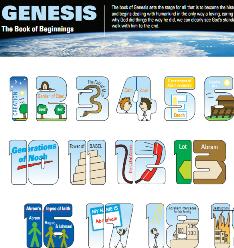
SVR (See, Visualize, Remember) describes itself as:

the exciting new way for adults to grasp the Bible in it’s entirety, chapter by chapter, and remember it. Unlike anything else, it uses contextual, patterned and linear graphics to help virtually anyone understand the Bible better.

Check out their website for further explanation and samples of their work.

You can also follow them on twitter: @svrtheword

Any others you know of, drop us a line!

Mission by way of the least in Luke

Bible and Mission by Richard BauckhamIn Richard Bauckham’s excellent Bible and Mission: Christian Witness in a Postmodern World he outlines four different ‘strands’ in the big story or metanarrative of the Bible, which illustrate the idea of movement in the Bible ‘From the One to the Many’:

(1) From Abraham to all the families of the earth
(2) From Israel to all the nations
(3) The king who rules from Zion to the ends of the earth
(4) To all by way of the least

I’ve been listening to Luke’s Gospel on my way home from work recently, which reminded me of this fourth strand (though, of course, each are important themes for Luke).

Here I just want to quote something Bauckham says about the theme, and then point out what this looks like in the early chapters of Luke:

This fourth of our thematic trajectories through the biblical story is a necessary reminder that the church’s mission cannot be indifferent to the inequalities and injustices of the world into which it is sent. The gospel does not come to each person only in terms of some abstracted generality of human nature, but in the realities and differences of their social and economic situations. It engages with the injustices of the world on its way to the kingdom of God. This means that as well as the outward movement of the church’s mission in geographical extension and numerical increase, there must also be this (in the Bible’s imagery) downward movement of solidarity with the people at the bottom of the social scale of importance and wealth. It is to these – the poorest, those with no power or influence, the wretched, the neglected – to whom God has given priority in the kingdom, not only for their own sake, but also for all the rest of us who can enter the kingdom only alongside them. (pp.53-54)

Consider the broken conditions into which the Gospel was announced and Jesus was born; a tiny pocket of a vast and domineering empire

Consider the barren couple to whom John the Baptist was born

Consider young, unmarried Mary

Consider the scorn and scandal

Consider the fragility of human life, of God becoming an embryo

Consider the future task of the baby in Mary’s song, to bring down rulers and raise the humble

Consider the early witnesses of Jesus: marginalised shepherds, frail but hopeful Simeon, and ancient Anna, who had known grief after only seven years of marriage.

When God became flesh he stepped into this broken world. But what Luke expertly portrays in what he says and in what he implies is the brokenness, fragility, grief and oppression endured and caused by real people in space and time.

Christian Mission – Old Testament Foundations and New Testament Developments

Christian Mission - Old Testament Foundations and New Testament DevelopmentsThanks to Antony Billington over at LICC for making us aware of a recent publication in the McMaster New Testament Studies series.

Christian Mission: Old Testament Foundations and New Testament Developments edited by Stanley E. Porter and Cynthia Long Westfall (Eugene: Pickwick Publications, 2010).

Here’s the blurb, contents and endorsements:

How did a first-generation Jewish messianic movement develop the momentum to become a dominant religious force in the Western world? The essays here first investigate the roots of God’s mission and the mission of his people in the Old Testament and Second Temple Judaism, specifically in the Psalms, Isaiah, and Daniel. The contributions then discuss the mission of Jesus, and how it continued into the mission of the Twelve, other Jewish believers (in the Gospels, General Epistles, and Revelation), and finally into Paul’s ministry to the Gentiles documented in the book of Acts and his epistles. These essays reach backward into the background of what was to become the Christian mission and forward through the New Testament to the continuing Christian mission and missions today.


Contents

Introduction: Christian Mission: Old Testament Foundations and New Testament Developments – Stanley E. Porter and Cynthia Long Westfall

“Declare His Glory Among the Nations”: The Psalter as Missional Collection – Mark J. Boda

The Book of Daniel and the Roots of New Testament Mission – Brian P. Irwin

Mark, Matthew, and Mission: Faith, Failure, and the Fidelity of Jesus – Michael P. Knowles

A Light to the Nations: Isaiah and Mission in Luke – Craig A. Evans

A Cord of Three Strands: Mission in Acts – Stanley E. Porter and Cynthia Long Westfall

The Content and Message of Paul’s Missionary Teaching – Stanley E. Porter

Paul’s Missionary Strategy: Goals, Methods, and Realities – Eckhard J. Schnabel

The Hebrew Mission: Voices from the Margin? – Cynthia Long Westfall

Bible and Mission: Missiology and Biblical Scholarship in Dialogue – Michael W. Goheen


Endorsements

“For too long now biblical scholarship and missiology have been progressing in splendid isolation with little reference to each other. This sparkling collection of essays not only demonstrates the interdependence of these disciplines but also takes seriously the Hebrew Scriptures and Second Temple Judaism as fertile soil in which the seeds for Christian mission were sown, came to flower in the New Testament, and continue to bear fruit in the ongoing global mission of the church at the beginning of the twenty-first century.”
—Trevor J. Burke
author of Adopted into God’s Family: Exploring a Pauline Metaphor

“Biblical scholars and missiologists have much to learn from each other. This work, with contributions from notable scholars, offers some fresh biblical insights for thinking about Christian mission.”
—Craig Keener
author of Romans: A New Covenant Commentary (Cascade 2009)

“We have needed a work that presents the development of Mission from Israel to the early church. These essays, written by leading scholars in both fields, admirably accomplish that goal. Here is a work that covers the field, presents missional roots as well as strategy, is very readable, and would serve as a fine textbook both for courses and personal study. I highly recommend this book.”
—Grant Osborne
author of The Hermeneutical Spiral: A Comprehensive Introduction to Biblical Interpretation

Bible and mission blogs

Every Tongue blogLately, we’ve been developing the Bible and Mission resources section of the microsite. Last week Wycliffe Bible Translators’ Eddie Arthur suggested that this section would “keep anyone in reading material for the next decade or two.” We are working on it Eddie!!
Here are some blogs we’ve come across that have dealt in some way with the themes of the Bible and mission, and missional hermeneutics. Let us know if there are more:
Realmeal ministries – Brian Russell; nb. missional hermeneutics page and tags here and here
Kouya Chronicle – Eddie Arthur
Cross Talk – Michael Gorman; nb. missional hermeneutic tag
Everytongue – Mark Woodward; nb. missional hermeneutics tag
Billington’s blog – Antony Billington; nb. missional hermeneutics tag

As we continue to build up the resources section, please let us know how it can best serve you in your Bible and mission thinking and practice.

Mission MA module intensives at Redcliffe College this year

Redcliffe College MA programmesRedcliffe’s MA in Bible and Mission is one of a number of postgraduate Master’s degrees we are running here at the college. We also have programmes in:

MA in Global Leadership in Intercultural Contexts
MA in Global Issues in Contemporary Mission
MA in Intercultural Studies in Asian Contexts
MA in European Mission and Intercultural Christianity
MA in Member Care
MA in Sport and Christian Outreach (in conjunction with the University of Gloucestershire)

The modules for these MAs are taught in intensive bursts throughout the year. To give you a flavour of what’s on offer, here is a list of planned dates and modules. Check out the links on each course above to see which modules are available on which programmes.

7-10 Oct and 9-12 Dec 2011
Method and content in missiological study

18-20 Oct and 15-17 Nov 2011
Reading the Bible missionally
An introduction to global leadership
Intercultural Christianity and the European Regions
The greening of mission

7-9 Feb and 20-22 March 2012
Theology of religions
Prosperity theology and suffering
Organisational development and cultural change
Just mission – justice issues in intercultural contexts (subject to validation by University of Gloucestershire)

2-5 Mar and 11-14 May 2012
The mission of the Church in the context of post-colonialism and globalisation
Crucial Issues in European mission and theology
Crucial issues in Asian mission and theology

30 April – 18 May 2012 (Summer school)
Bible engagement in intercultural contexts
Method and content in missiological study
The greening of mission
Crucial Issues in European mission and theology
Crucial issues in Asian mission and theology
The mission worker as a person: Building life-skills and interpersonal skills
The member care worker: Equipping self and others

The Bible and trends in Europe today

2012 European Consultation: Trends in Europe todayEvery year Redcliffe College hosts a consultation on mission in Europe. The next one, which is organised by Global Connections, ECM and Redcliffe, is in January and is focused on the theme of Trends in Europe Today.

I’ll be offering some biblical reflection toward the end of the programme. If you are interested or engaged in mission in a European context do come along.

Redcliffe’s European specialism is embodied in the work of our Nova Research Centre.

There is info about the consultation below from Redcliffe’s website. .

2012 European Consultation: Trends in Europe Today

Wednesday 4 to Thursday 5 January 2012

It isn’t easy to find people who love Jesus in Europe today. Only in the Middle East are you less likely to meet people who follow Christ. This is a sad statement to make about Europe, whose skylines are littered with steeples.

Nonetheless God has called many churches and mission organisations to say “This isn’t good enough! We want God to be glorified in Europe too!”. But it isn’t always easy to work in today’s most secular continent.

Organised by Global Connections, ECM and Redcliffe College, this consultation is designed to help stimulate your thinking about some of the trends we are facing in Europe today. Experienced missional thinkers and practitioners will deal with the challenges of Migration, Urbanisation and Islam.

As with previous consultations this is a unique chance to network with other leaders involved in Europe with its many unique and changing facets, to share information on current activities, focus and aims, as well as future plans and dreams.

Speakers include:

Robert Calvert (Urbanisation), formerly of Scotland, currently pastors a church in Rotterdam. It is made up of people from more than forty nations and the team of elders is drawn from four continents.

Alessia Passarelli (Migration) consults for the Churches’ Commission for Migrants in Europe (Brussels) while also doing PhD research into the relationships between migration and churches in Italy and the Republic of Ireland

Bert de Ruiter (Islam) speaks on issues related to Christian-Muslim relations and has developed a course called Sharing Lives to help Christians overcome their fear and share their lives with Muslims.

Tony Peck (Church response) is General Secretary of the European Baptist Federation and an Associate Secretary of the Baptist World Alliance.

Chris Wigram (Mission organisation response) is International Director of European Christian Mission, which works in 18 European countries.

Tim Davy (Biblical reflection) is Director of the Centre for the Study of Bible and Mission at Redcliffe College, and lecturer in Biblical Studies and Mission

Ian Nicholson (Prayer) works with 24/7 Prayer.

The consultation will be held from 12 noon on 4th January through 2pm on 5th January 2012 at Redcliffe College.

Directions to Redcliffe College

Cost

Until 31 October 2011 the cost is £75, which includes an early booking discount.
From 1 November to 23 December 2011 (the booking deadline) the cost is £85.
This will cover food and accommodation, including lunch and dinner on 4th January, and breakfast and lunch on 5th January.

To book

You can download the booking form here, or book online via the Global Connections website
If you have any other queries relating to booking for this event, please contact Evan Winter.

Psalms and the missional formation of the Church

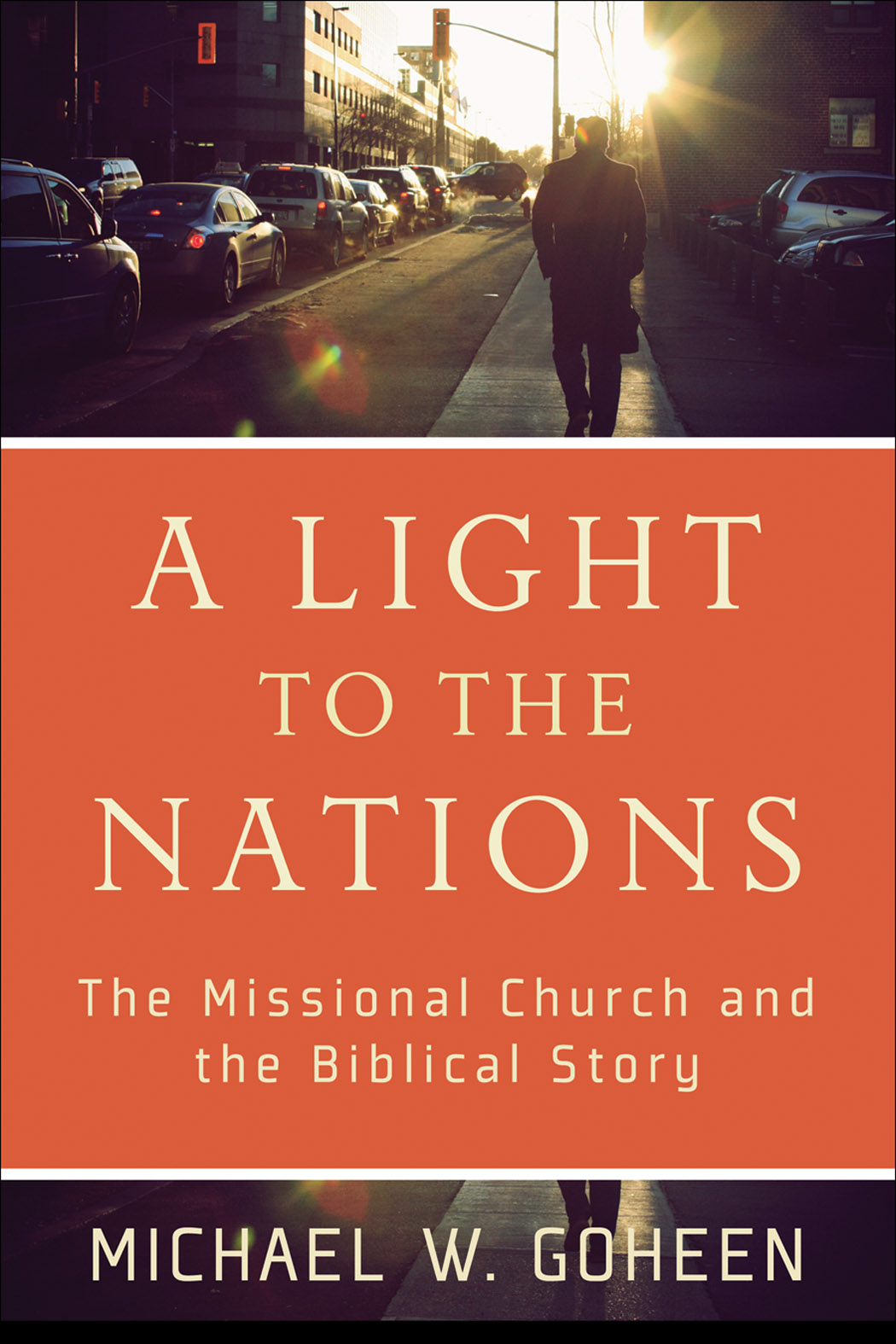
A Light to the Nations by Michael GoheenI’m really enjoying Michael Goheen’s book,  A Light to the Nations: The Missional Church and the Biblical Story. Here’s a nice quote on the relationship between the Psalms and the formation of the people of God, and how this relates to our engagement in God’s mission:

We get a glimpse of the richness of Israel’s worship when we read Israel’s temple hymnbook – the psalms, which prompt the people to thanksgiving, wisdom, commitment, repentance, joy, and obedience. The psalms nourish faithfulness in all its dimensions, so that Israel might be an attractive display people. Israel’s worship and liturgy also creates an alternative worldview to that of its pagan neighbors, opening up a very different way of seeing and living in the world. It offers an unclouded vision of the world in which the one true God, Israel’s God, is creator of all things, ruler of nature and history, and merciful savior. Rodney Clapp captures this perspective on worship in the title of his chapter on the church’s worship: “Welcome to the real world.” In the midst of the land, before the nations, Israel’s worship celebrates the one true God and his mighty deeds in history. What Paul Jones says about the church is certainly first true of Israel: “Inasmuch as the Church is anchored in the gracious acts of God, corporate worship sustains and transmits Christian identity formation.” And so in these ways Israel’s identity and self-understanding, its role and calling in the midst of the nations, are constantly celebrated and nourished by its liturgy. (pp.57-58)

One question that arises for me is, ‘In what ways are we celebrating and nourishing our role and calling in the midst of the nations?’

What do you think?

PS. If you are interested in the relationship between the Psalter and the mission of God, have a look at the June 2010 issue of Encounters Mission Journal, which was on the theme of The Psalms and Mission. It features the following articles:

  • Editorial:  The Centre for the Study of Bible and Mission.
    (Tim Davy, 761 words, pdf 54 KB)
  • Article 1:  The Nations in the Psalms.
    (Prof Gordon Wenham, 5513 words, pdf 65 KB)
  • Article 2:  The Nations in the Psalms and the Psalms in the Nations – a response.
    (Tim Davy, 912 words, pdf 51 KB)
  • Article 3:  Psalms 1-2 as an Introduction to Reading the Psalms Missionally.
    (Dr Brian Russell, 2083 words, pdf 51 KB)
  • Article 4:  Reflections on the Nations in the Psalms.
    (Eddie Arthur, 485 words, pdf 23 KB)
  • Article 5:  The Nations in Isaiah 40-55.
    (Rev Dr David Spriggs, 1218 words, pdf 37 KB)
  • Article 6:  Missionary Attrition and the Psalms of Lament.
    (Name withheld, 1041 words, pdf 41 KB)
  • Article 7:  A Missional Reading of Psalm 47.
    (Tony Hughes, 1664 words, pdf 48 KB)
  • Article 8:  Praying the Psalms.
    (Rev Dr Ian Stackhouse, 2598 words, pdf 59 KB)


  • Book Review 1:  Transformation after Lausanne: Radical Evangelical Mission in Global-local Perspective.
    (by Al Tizon; Regnum Books)
  • Book Review 2:  Understanding and Using the Bible.
    (edited by Christopher J.H. Wright and Jonathan Lamb; SPCK)