Mission and Mark 13

The other morning we were looking at Mark’s Gospel and, in particular, chs. 11-13. Chapter 13 involves some hotly debated views on what precisely is being referred to. Is it the destruction of the temple, or the second coming, or both?

Regardless of one’s views on this one thing is clear from what Jesus says. In whatever context they find themselves Jesus’ disciples (whether the apostles, Mark’s original audience or the church today) should get on with the missionary task he gives us:

And the gospel must first be proclaimed to all nations. (13: 10, ESV)

The Bible and Lausanne’s Cape Town Commitment – part two

The excellent Scripture Engagement website highlighted another part of the Cape Town Commitment related to Bible and Mission.

The following is a section within PART II For the world we serve: The Cape Town Call to Action,  IV. Discerning the will of Christ for world evangelization

C)    Aim to eradicate Bible poverty in the world, for the Bible remains indispensable for evangelism. To do this we must:
(1)   Hasten the translation of the Bible into the languages of peoples who do not yet have any portion of God’s Word in their mother tongue;
(2)   Make the message of the Bible widely available by oral means. (See also Oral cultures below.)

I’ve posted before on the essential task of the continuing task set before the church of Bible Translation. Living in the West it is too easy to take this for granted. We need our conviction and passion for God’s Word, God’s world and God’s people to spur us on to action. This is an issue of justice as much as anything else. I don’t say this lightly.

D)    Aim to eradicate Bible ignorance in the Church, for the Bible remains indispensable for discipling believers into the likeness of Christ.
(1)   We long to see a fresh conviction, gripping all God’s Church, of the central necessity of Bible teaching for the Church’s growth in ministry, unity and maturity…
(2)   We must promote Bible literacy among the generation that now relates primarily to digital communication rather than books, by encouraging digital methods of studying the scriptures inductively with the depth of inquiry that at present requires paper, pens and pencils.
E)    Let us keep evangelism at the centre of the fully-integrated scope of all our mission, inasmuch as the gospel itself is the source, content and authority of all biblically-valid mission. All we do should be both an embodiment and a declaration of the love and grace of God and his saving work through Jesus Christ.

It is not enough to own a Bible (or several) in our heart language. We must know it and engage with it. We must help others do the same. On the issue of technology, how can we engage people with the Bible who ‘don’t do books’? What is interesting to me is the relationship between the ultra-technological generation, many of whom have moved beyond books (or have never engaged with them), and the vast numbers around the world for whom books are not the primary form of communication…

2. Oral cultures
The majority of the world’s population are oral communicators, who cannot or do not learn through literate means, and more than half of them are among the unreached as defined above. Among these, there are an estimated 350 million people without a single verse of Scripture in their language. In addition to the ‘primary oral learners’ there are many ‘secondary oral learners’, that is those who are technically literate but prefer now to communicate in an oral manner, with the rise of visual learning and the dominance of images in communication.
As we recognize and take action on issues of orality, let us:
A)    Make greater use of oral methodologies in discipling programmes, even among literate believers.
B)    Make available an oral format Story Bible in the heart languages of unreached and unengaged people groups as a matter of priority.
C)    Encourage mission agencies to develop oral strategies, including: the recording and distribution of oral Bible stories for evangelism, discipling and leadership training, along with appropriate orality training for pioneer evangelists and church-planters; these could use fruitful oral and visual communication methods for communicating the whole biblical story of salvation, including storytelling, dances, arts, poetry, chants and dramas.
D)    Encourage local churches in the Global South to engage with unreached people groups in their area through oral methods that are specific to their worldview.
E)    Encourage seminaries to provide curricula that will train pastors and missionaries in oral methodologies.

Dealing with the question of orality is one of the major challenges for Bible Engagement in the coming generations. (indeed, it is fair to say it always has been?). So, as the statement asks of us in the final point, what are we doing here at Redcliffe to address the issue. I’ll highlight three things:

1. In our second year Psalms course one of the assignments is to produce a creative piece that comes out of a deep reflection on a psalm. Students have done this in an amazing variety of ways – painting, drawing, sculpting, welding, video, song, sewing, blogging.

2. An new third year module we are looking to deliver (subject to validation) in the next academic year is called Story, Song and Social Networks: Bible Engagement and Oral Culture. It aims to equip students with an understanding of the thinking and practice of communicating the Bible to individuals and communities of oral learners in a variety of cultural contexts. This might be an ‘unreached’ people group who use song as the primary means of communication, or sections of UK culture whose preferred mode of communication is through web 2.0.

3. As well as a module on missional hermeneutics, our MA in Bible and Mission has a module on Bible Engagement in Intercultural Contexts delivered by some fantastic thinker-practitioners from agencies like Wycliffe Bible Translators and Bible Society.

There is more we could do and more we should do, but that is the challenge before us all.
The Bible and Lausanne’s Cape Town Commitment – part one

The recently published Cape Town Commitment is a document to come out of Lausanne, following the working groups and convention in South Africa in the Autumn 2010. It is subtitled ‘A Confession of Faith and a Call to Action’. You can read the whole thing here: The Cape Town Commitment.

There’s a tremendous amount to reflect upon within this large document. So I’ll just look at one section today.

We Love God’s Word

This section of the commitment highlights four aspects of the Bible: The Person the Bible reveals; The story the Bible tells; The truth the Bible teaches; The life the Bible requires. The second is put this way:

The story the Bible tells. The Bible tells the universal story of creation, fall, redemption in history, and new creation. This overarching narrative provides our coherent biblical worldview and shapes our theology. At the centre of this story are the climactic saving events of the cross and resurrection of Christ which constitute the heart of the gospel. It is this story (in the Old and New Testaments) that tells us who we are, what we are here for, and where we are going. This story of God’s mission defines our identity, drives our mission, and assures us the ending is in God’s hands. This story must shape the memory and hope of God’s people and govern the content of their evangelistic witness, as it is passed on from generation to generation. We must make the Bible known by all means possible, for its message is for all people on earth. We recommit ourselves, therefore, to the ongoing task of translating, disseminating and teaching the scriptures in every culture and language, including those that are predominantly oral or non-literary.

This is a very helpful overview of the missional nature of the big story of the Bible, as well as the worldview-shaping nature of the Scriptures. It also touches on the Bible as a tool of mission in the final paragraph. Could it have talked about mission in a broader sense (cf. the ‘integral mission’ or ‘mission as transformation’ discussion the document addresses elsewhere)? Nevertheless, it is excellent to see such an overarching view of the Bible as thoroughly missional.

Wealth, poverty and power in the Old Testament

Chris Wright's Old Testament Ethics for the People of GodAs well as teaching on specific biblical modules at Redcliffe, occasionally I join other classes for one-off sessions looking how an aspect of the biblical material relates to their subject. The most recent class like this was on Friday when I joined the Diploma and Professional in Mission class on ‘Wealth, Poverty and the Environment’ to look at how the Old Testament addresses the themes of wealth, poverty and power.

I found Chris Wright’s Old Testament Ethics for the People of God particularly helpful in preparing this session. He outlines the Old Testament’s understanding of poverty in three ways: what causes poverty? how are God’s people to respond to poverty; and a future vision of a new creation without poverty.

We then looked at three passages, Deut. 15 and Job 29, 31. The Deuteronomy passage is well-known for its discussion of how Israel is to approach the issue of poverty. Indeed, in his excellent NIBC commentary on Deuteronomy, Wright (again!) suggests that the passage ‘offers limitless opportunity for ethical and missiological reflection and action’. OK, there is hyperbole in this statement but it is undoubtedly true that the passage (and other parts of Deuteronomy) contains much food for missiological and ethical thought. My own Master’s dissertation was on the orphan, widow and alien in Deuteronomy. A couple of years ago I also had a student here at Redcliffe who wrote her dissertation on the book’s approach to poverty and how that might inform how the church addressed the issue in the contemporary UK context.

The Job passages are more obscure to most, but in an attempt to defend his righteousness Job provides us indirectly with a window into an ideal ethical life where those with power protect the weak and address injustice. At one point Job claims that ‘The blessing of him who was about to perish came upon me, and I caused the widow’s heart to sing for joy.’ (29:13, ESV)

Wouldn’t that verse make a great epitaph?

English Translations of the Bible – An Uncomfortable Privilege?

I’ve just written an article that will appear later this year in Inspires, the magazine of the Diocese of Gloucester. It touches on subjects like the 400th anniversary of the King James Bible, the Biblefresh initiative, Redcliffe College, and the work of Wycliffe Bible Translators.

It is fantastic to have access to so many different versions of the Bible in English; I love being able to refer to different translations for different purposes. It is a real privilege; but it is one that I’m finding increasingly uncomfortable.

Consider the following statistics from Wycliffe Bible Translators. The previous century saw more translations of the Bible produced than the rest of the history of the church put together. Yet there are still around 340 million people (representing over 2000 languages) who do not have a single word of the Bible in their ‘heart language’.

Perhaps it is time for us English speakers to say, ‘You know what, we have enough versions of the Bible now. Let’s turn our attention more fully to those that have none.’

Why community is vital for evangelism – a missional reflection on Mark 3

In a lecture on Mark’s Gospel today we were reflecting on Jesus’ words in 3:33-35:

33. “Who are my mother and my brothers?” he asked.
34. Then he looked at those seated in a circle around him and said, “Here are my mother and my brothers! 35. Whoever does God’s will is my brother and sister and mother.” (NIV)

Bible and Mission Intern, Mark, made a shrewd observation by prodding us to think about what this might mean in a context where someone professes faith in Christ and is shunned by their family and community as a result.

Just what is our responsibility towards those whom we are seeking to reach? Surely at the very least it should mean that the church offers a family and community to which the new believer can be embraced. The image of church as family is a powerful metaphor; perhaps like no other it conveys the intense and necessary community that can make all the difference.

Mission and the Image of God

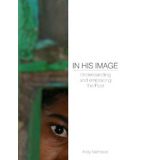
In the latest issue of Encounters Mission Journal (December 2010 on the theme, Justice and Mission) I reviewed Andy Matheson’s recent book In His Image: Understanding and Embracing the Poor (Authentic Media).

I was reading it while Redcliffe’s MA in Bible and Mission students were taking a class in missional hermeneutics called, ‘Reading the Bible Missionally’. We agreed with Matheson when he suggests that we often neglect the first two chapters of the Bible when formulating ideas about humanity in relation to the mission of God. His book makes a timely and important contribution to the discussion.

Here’s the review:

In His Image is a popular level book written by the International Director of Oasis. Drawing particularly, though not exclusively on his extensive experience in India, Andy Matheson challenges the reader with the importance, complexity and possibilities of standing alongside the poor as a way of participating in the mission of God.

His particular angle, as the title suggests, is to view the issue of poverty (in its many guises) through the lens of all people being made in the image of God. This gives the book a welcome coherence which sets his discussion helpfully within a robust framework.

Following two introductory chapters on the meaning of the image of God and an analysis of the various dimensions of poverty, Matheson then works through a series of relatively short chapters that unpack and illustrate his discussion:
Community; Wholeness; Change; Empowerment; Compassion; Justice; Prayer; Receiving; Celebration; Prevention; and Perspective.

I appreciated the use of the image of God as a starting point, not least because it puts Genesis 1-2 more on the agenda than has often been the case. While he does not compromise on the reality of humanity’s rebellion and sin, Matheson is keen for the reader not to rush past the opening chapters of the Bible, ‘after all, Genesis 1 came before Genesis 3. People are made in the image of God before sin comes into the world. In fact, the fall in Genesis 3 is so horrendous because our creation in God’s image in Genesis 1 is so wonderful.’ (p3)

I found the book’s anecdotal material profoundly challenging, not just because of the heartbreaking stories of broken lives and desperate poverty, but also because of the way Matheson combines honesty about his own failings with a resilient hope that God is at work in the midst of seemingly overwhelming need.

Although his focus is his own experience in India he also draws helpfully on stories from elsewhere, most notably from the work of Oasis in the London area.

A number of key, up-to-date issues are dealt with well, including the difference between development and transformation, the relationship between the local/personal and the global, the need for prevention rather than just dealing with the aftermath of abuse (e.g., with people trafficking), and the importance of genuine partnership.

The book is clearly not intended to be an exhaustive treatment of the subject of poverty, but it certainly makes a significant contribution to the discussion. More than merely discussing these matters, In His Image spurs the reader towards more informed action. A very good and readable book, on an ever-pressing issue.

Regional Bible Commentaries

The brilliant Pieter Kwant explains about the concept and reality of Bible commentaries by and for different regions of the world.

The video is one of a series of videos about the fantastic work of Langham Partnership International.

You can view the video on Youtube: http://www.youtube.com/watch?v=jQW317vYBNI

Encounters mission journal on Justice and Mission

Justice and Mission Issue of Redcliffe's Encounters Mission Journal

The December issue of Redcliffe’s online mission journal, Encounters, is on the theme of Justice and Mission. You can find a link to the issue here: Justice and Mission issue of Encounters mission journal

The edition is edited by my colleagues Andy and Carol Kingston Smith, who are doing some terrific work at the College in this whole area. Here’s a snippet from the editorial plus a list of articles (I also contribute a book review – more about this in a future post):

‘A warm welcome to this edition of Encounters. A number of topics are considered which highlight the central role of justice in contemporary mission. Living in an increasingly interconnected and complex world requires of us an acute awareness of issues at both local and global levels and how they are likely to play out in each new context. We trust that this edition will contribute to sharpening your thinking and vision for mission in our world today…’

Global Mission and Justice – Snapshots from History – Dr Dewi Hughes

Justice and Eschatology – A Response to Dr Dewi Hughes – Dr Jonathan Ingleby

Caring Wisely in a Globalised World – Carol Kingston-Smith

Bodies for Sale: Globalised Trafficking for the Sex Trade – An Interview with Helen Sworn founder of Chab Dai, Cambodia – Carol Kingston-Smith (ed.)

Speaking up for Justice Connecting Church and Government – Rachel Davies

Do Justice, Love Mercy and Walk Humbly – An interview with Sheryl Haw: International Director, Micah Network – Andy Kingston-Smith (ed.)

Act now! Inspiring Churches to act on Climate Justice – Ben Niblett

Is Fairtrade the Same as Just Trade? A Direct Trade Perspective – Ian Meredith

A Case Study of Relational Justice and Patterns of Familial Violence – Muhabura District, Uganda Mission – The Rt. Rev. Cranmer Mugisha

Book Review:  In His Image: Understanding and Embracing the Poor (by Andy Matheson; Authentic Media)


What would you do?

1 and 2 CorinthiansIn his recently published International Study Guide on 1 & 2 Corinthians J. Ayodeji Adewuya offers a contemporary case study reflecting his discussion of food sacrificed to idols in 1 Cor. 8:1-11:1.

Deji is a Christian and has a sister who is married to a Muslim. He happened to visit his sister during one of the religious festivals. He witnessed the slaughtering of the ram that was accompanied with some recitation. It was time to eat and he suddenly found himself in an awkward situation. If he did not eat, he risked offending his sister and brother-in-law. More importantly, he thought he might shut the door on every opportunity to present the gospel to them. On the other hand, he thought that his participation would amount to a validation of their practice. What should he do?

What would you do?

This provided an excellent discussion in a recent 3rd year class here at Redcliffe. Different views were expressed representing various home contexts, including one student sharing about how this is an issue he confronts often when visiting his family.

It’s fine to contextualise issues for the West (what are our idols: celebrity, success, progress, cheap goods, etc.) but let’s not consign the live issues discussed in the Bible as just happening then. Of course there are nuances and differences in contemporary intercultural contexts, but we in the West need to remember that sometimes an idol is an idol.