Youversion offer another chance to download the NIV Bible app for free

If you want the NIV on your phone to use offline now is your chance! In a recent email YouVersion made this announcement:

Download the Offline NIV

For a limited time, you’ll be able to download the New International Version(NIV) for offline use in the Bible App. From 12:00 AM December 1 through 11:59 PM December 12—Central Time U.S. (GMT -6)—once again, you can download the NIV. If you missed your chance last time, or if you know someone who did, spread the word and make sure you take advantage of this opportunity! (When you download a version, that means you can read it in the Bible App—even when you can’t connect to your service provider or to the Internet.) Special thanks go to Biblica and Zondervan for making the NIV available to the YouVersion community!

Thank you Biblica, Zondervan and YouVersion 🙂

The Gospel and Cultural Diversity

Bible and Mission by Richard BauckhamDoes the presence of a single ‘grand narrative’ that is the biblical story reduce, flatten or fight against cultural diversity? Is it just another example of a totalising ideology that seeks to impose itself at the expense of particularity?

I believe the Bible answers these questions with a resounding, ‘no!’. I’ve posted before on what James Brownson calls the ‘irreducibly multi-cultural‘ mode of the presence of God (see The Multicultural Presence of God). But here is a nice quote from Richard Bauckham in his Bible and Mission: Christian Witness in a Postmodern World. In it he suggests not only that the Bible does not flatten cultural diversity, but that it celebrates and requires it. Indeed, the biblical metanarrative confronts those competing stories (in our own day, globalisation being a dominant one) that would seek to totalise:

The biblical story is apt to clash with the global metanarratives of power, and… with local narratives that ape them. But this is not necessarily the case with all the local individual narratives it encounters. The biblical story is not, as the narrative of economic globalization has been called, a cultural tidal wave sweeping away all the wonderful diversity of human culture. Perhaps the miracle of tongues at Pentecost in Acts 2 is a symbol of this. It is a miracle that symbolically transcends the diversity of human languages: they no longer divide people or impede understanding, as they did at Babel. But this diversity of human language is not abolished. Everyone hears the gospel in their own language. The miracle was in one sense quite superfluous, since virtually everyone there could have understood Greek, Aramaic or Latin. There was no practical need for such profligate speaking in all kinds of local languages. But God reverses Babel in such a way as rather conspicuously to affirm human cultural diversity. When Paul states that in Christ there is no longer Jew, Greek, barbarian or Scythian (Colossians 3:11), what he denies is cultural privilege, not cultural diversity.

The biblical story is not only critical of other stories but also hospitable to other stories. On its way to the kingdom of God it does not abolish all other stories, but brings them all into relationship to itself and its way to the kingdom. It becomes the story of all stories, taking with it into the kingdom all that can be positively related to the God of Israel and Jesus. The presence of so many little stories within the biblical narrative, so many fragments and glimpses of other stories, within Scripture itself, is surely a sign and an earnest of that. The universal that is the kingdom of God is no dreary uniformity or oppressive denial of difference, but the milieu in which every particular reaches its true destiny in relation to the God who is the God of all because he is the God of Jesus.

It’s worth noting that talking about Pentecost as a ‘reversal’ of Babel is a complex and contested issue. Check out Wycliffe’s Eddie Arthur on Babel, Pentecost and the Blessing of Diversity to explore more.

Shalom as a way into the Biblical story

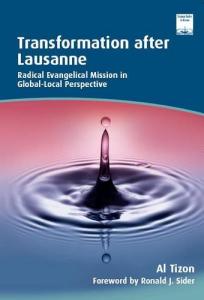
Transformation After Lausanne - TizonThere are numerous concepts or images that we could use to trace the storyline of the Bible (covenant, election, kingdom, etc). What about the concept of the presence, disruption and restoration of shalom?

Here’s a nice quote from Al Tizon’s very helpful book, Transformation After Lausanne: Radical Evangelical Mission in Global-Local Perspective:

Only a shallow translation of the Hebrew word shalom would limit its definition to the idea of the absence of conflict and peace. Although it certainly includes peace, shalom also conveys the justice and righteousness that produces that peace (Jer. 6:13, 28). Shalom denotes a state wherein God rules, resulting in a harmonious relationship between God and humankind. And flowing from that relationship come: 1) the wholeness of persons, physical, psychological, spiritual and emotional well-being, 2) the wholeness of human interactions – love and family, social justice, righteousness and peace, and 3) the wholeness of the relationship between humankind and the rest of creation – ecological sustenance and environmental stewardship…

God’s affirmative evaluation of the entire created order reflects the biblical theological fact that the world began in a state of shalom. Shalom existed because God ruled the universe.

The account of the fall of humanity in Genesis 3 conveys the tragic disruption of that shalom. Through Adam and Eve’s disobedience via the serpent’s deception, sin entered into the world… In essence the act [of disobedience] challenged God’s rule, and consequently shalom existence collapsed.

Tizon’s book is well worth a read. You can read a review of it by my colleague, Darrell Jackson in issue 33 of Redcliffe’s Encounters Mission Journal, which was on the theme of The Psalms and Mission.

What does the Bible say about justice?

The theme of the day here at Redcliffe has been justice. It wasn’t a planned thing but from 9-11 I was teaching on Isaiah and Micah in the first year Missional Introduction to the Old Testament class; from 11-12 our college devotions included Matthew Price, International Director of The Lawyers Christian Fellowship; from 2.30-3.30 I led a postgraduate seminar on ‘Bible and mission at the margins: missional reflections on the widow orphan and alien in Deuteronomy’.

There is some really exciting stuff going on at college in this whole area. In particular my colleagues Andy and Carol Kingston-Smith are heading up a new initiative called ‘JusTice – Justice and Advocacy in Mission’. Here’s a link for more information on the Redcliffe website. Also, here’s a their new media links

JusTice Facebook

JusTice Twitter

JusTice blog


Was Jonah a missionary?

Chris Wright's The Mission of GodAll first years at Redcliffe are required to take a Bible overview consisting two modules: ‘A Missional Introduction to the Old Testament’ and ‘A Missional Introduction to the New Testament’ (see these two posts for the rationale behind a missional approach to teaching the Bible: Making a Biblical Studies programme missional, part 1 & part 2).

Students are currently wrestling with the assignment for the OT course, which this year is to discuss the extent to which they think the book of Jonah would be an appropriate subject for a Bible study series at a church’s mission weekend.

For obvious reasons I’m not going to discuss this at length but I thought this was a nice quote from Chris Wright’s The Mission of God on the subject:

The book of Jonah has always featured in biblical studies of mission, sometimes as almost the only part of the Old Testament deemed to be of any relevance. Here at least is someone who has some semblance of being an actual missionary, sent to another country to preach the word of God. However, for all the fascination of the character and adventures of Jonah, the real missional challenge of the book undoubtedly and intentionally lies in its portrayal of God. If Jonah is intended to represent Israel, as seems likely, then the book issues a strong challenge to Israel regarding their attitude to the nations (even enemy nations that prophets placed under God’s declared judgment), and regarding their understanding of God’s attitude to the nations. The concluding open-ended question of the book is an enduring, haunting rebuke to our tendency to foist our own ethnocentric prejudices on to the Almighty.

It is interesting and informative to compare and contrast the response to Jonah to the word of divine judgment on a pagan nation with that of Abraham. Commissioned to proclaim Nineveh’s doom, Jonah ran away and jumped in a boat, alleging later that he had done so precisely because he suspected that YHWH would revert to type and show compassion. Informed of God’s intention to investigate the outcry from Sodom and Gomorrah, Abraham jumps to intercession and finds YHWH prepared to be even more merciful than he initially bargained for.

Nathan MacDonald finds a thread running through texts such as Genesis 18, Exodus 32-34, Psalm 103:6-10 and Ezekiel 18. “The Judge of all the earth,” who will unquestionably do what is right, is also the “gracious and compassionate God” who “takes no pleasure in the death of the wicked but rather that they turn from their ways and live.” The character of YHWH is exercised in forgiveness and mercy, extended to all nations, not just to Israel. (p.461)

Are we failing to communicate the Gospel effectively to four billion people?

International Orality NetworkIt was recently reported that there are now seven billion people in the world today. This is just a short post to remind us all that the majority of those seven billion people are oral communicators.

The International Orality Network make the following points on their website:

The Need
There are 4 billion oral learners in the world, with a minority of resources attempting to reach them for Christ.

The People
The remaining Unreached People Groups are predominantly oral societies

The Solution
Communicate the message of Christ to people in ways that make sense to them – instead of in ways that make sense to us!

What will this mean in your context?

And while we are on the subject of statistics, 350 million people (that’s 5% of the entire world population) don’t have a single word of the Bible in their heart language.

Milestones can be important. They cause us to stop and consider where we have come from, where we are, and where we are heading. As we reflect upon the enormous number of 7,000,000,000 we might consider:

  • how can I learn to address the preference for oral communication in my own community?
  • how can I play a part in getting the word of God to people who don’t have it?

Essentially they both address the same question: how can I engage people with the Bible in a way that is most meaningful to them?

These are some of the questions we consider in courses at Redcliffe College, both at undergraduate and postgraduate level. And check out Wycliffe Bible Translators‘ website as well to see how you can find out, or get involved more in these vital areas.

Michael Gorman on a missional hermeneutic for Paul’s letters

In a Catalyst Online journal article entitled Missional Musings on Paul Michael Gorman offers some some ways to approach Paul’s letters from a missional perspective:

In a Pauline missional hermeneutic, the guiding question is: How do we read Paul for what he says about the missio Dei and about our participation in it? In other words, the issue before us is not primarily exegetical or historical, but hermeneutical. What is a Pauline letter? (a mission document). How are we to read it appropriately? (missionally). Older historical and exegetical questions—e.g., about how and whom Paul evangelized, and whether he expected his communities to do the same—are still relevant, but they will not be our primary concerns, and they are not ends in themselves. Rather, they are part of a larger discussion about Paul and mission. Together with all kinds of new questions that emerge from this enlarged understanding, they serve as a means to our own theological and missiological reflection.

Read the whole article here: Missional Musings on Paul

BMS Mission Catalyst issue on mission and the Bible

Mission Catalyst issue on Mission and the BibleI missed this one when it came out (hooray for archives!), but a 2009 issue of BMS World Mission’s publication, Mission Catalyst focused on the theme of Mission and the Bible. Here’s the contents:

Cover to cover: mission throughout scripture
Mission doesn’t just start at Matthew 28. As Alan Pain explains, God told his people to ‘go’ from Genesis to Jesus – and beyond.

Oral Bible: the greatest story of all
In North Africa, people are coming to faith in Jesus through the mission of OneStory, which shares the Bible in culturally relevant ways. This is an example of that work in action.

New perspectives: mission brings the Bible to life
Four BMS mission workers reflect on how the culture in which they now live has changed the way they approach the Bible.

Bible reflection
The Bible is rich in world mission messages. Rev Sian Murray Williams focuses on one passage – the Journey to Emmaus in Luke 24: 13-35 – and provides a four-point sermon outline.

Click on the link to read the issue on Mission and the Bible

Eugene Peterson on a pastoral reading of Genesis 1 and 2

Christ Plays in Ten Thousand Places by Eugene PetersonWhat is Genesis 1 and 2 ‘about’? I love this quote from Eugene Peterson in his Christ Plays in Ten Thousand Places: A conversation in spiritual theology:

I missed the personal immediacy of Genesis 1-2 for a long time. Early on I was distracted by the arguers and polemicists who were primarily interested in how things got started. As an adolescent I got mixed up with friends who loved using these texts to pick fights with evolutionists and atheists. Still later I become intoxicated with the words and images and syntax, comparing and evaluating them in the study of the contrasting but still fascinating worlds represented in the ancient Sumerian and Assyrian, Babylonian and Egyptian civilizations.

Then I became a pastor and gradually realized what powerful texts Genesis 1 and 2 are for dealing with life just as it come to us each day. As pastor my work was to pray and teach and preach the Holy Scriptures into the lives of mothers and fathers raising their children, farmers in their wheat fields, teachers in their classrooms, engineers building bridges, sergeants and captains and colonels keeping watch over our national security, and not a few arthritic octogenarians in nursing homes.

In the course of this work, I’ve come to think that Genesis 1 and 2, prominent as they are in launching us into the grand narrative of the Bible, are among the most under-interpreted and under-used texts for shaping an obedient and reverent life of following Jesus in our daily, ordinary, working and worshiping lives.

My shift from reading Genesis 1-2 primarily as an account of the beginning of all things to reading it as a text for beginning to live right now took place early in my pastoral work. As I was learning how to lead my congregation into an obedient life of worshiping and following Jesus, I was struck by how extensively the cultural and spiritual conditions in which I was working matched the exile conditions of the Hebrews in the sixth century before Christ: the pervasive uprootedness and loss of place, the loss of connection with a tradition of worship, the sense of being immersed in a foreign and idolatrous society. I felt that I and my congregation were starting over every week; there was no moral consensus, no common memory, all of us far removed from where we had grown up. The lives of the parishioners seemed jerky and spasmodic, anxious and hurried, with little sense of place or grounding. When I realized that these were the same exile conditions lived through by the people of God in the sixth century B.C., I started preaching and teaching the exile texts of Isaiah, those great pastoral messages to people who had lost touch with their time and place in the world. In doing that I discovered that one of the most important Isaianic words used with these exiled people was “create.” “Create” is a word that is used in the Bible exclusively with God as the subject. Men and women don’t, can’t, create. But God does. When nothing we can do makes any difference and we are left standing around empty-handed and clueless, we are ready for God to create. When the conditions in which we live seem totally alien to life and salvation, we are reduced to waiting for God to do what only God can do, create. The words “create” and “Creator” occur more times in the exilic preaching of Isaiah than in any other place in the Bible – sixteen times as compared to the six occurrences in the in the great creation narratives of Genesis 1-2. As I pursued this pastoral task, I realized how immediate and powerful, how convincing and life-changing, the creation work of God is among a people who feel so uncreated, so unformed and unfitted for the world in which they find themselves. While under Isaiah’s influence I was moving from my pulpit to hospital rooms and family rooms, coffee shops and community gatherings, praying with and listening to bored or devastated men and women, “create” emerged out of the background of what happened long ago in Canaan and Egypt and Babylon into prominence in my community as an actively gospel word of what God is doing today among the exile people with whom I was living.

After several years of this, I came back to Genesis 1-2 in a fresh way and found in these texts an urgency and freshness and immediacy that surprised me. No longer was I reading Genesis and asking, “What does this mean? How can I use this?” I was asking, “How can I obey this? How can I get in on this?” (pp.63-64)

He executes justice for the fatherless and the widow

So says Deut. 10:18, in the context of a glorious hymn surveying the majesty and power of God. But what does this mean for mission today? Here’s one example of a ministry that is embodying this desire of God to see justice upheld for the weak. For more details visit International Justice Mission’s website.

Also, check out a developing Redcliffe College initiative: JusTice – justice . advocacy . mission