Redcliffe College Biblical Hebrew Week 2010

Every year Tricia Johnson (Redcliffe’s main lecturer in Biblical Hebrew) and I team up to co-teach an intensive week of Hebrew. There are two courses: one for beginners (assuming no knowledge) and one for intermediates.

Here’s the blurb from the Hebrew Week page on Redcliffe’s website. There is also a pdf leaflet and booking form available.

Biblical Hebrew Week 2010 – Sunday 20 to Saturday 26 June 2010

Two courses to choose from:
Biblical Hebrew for Beginners
or
Moving on with Biblical Hebrew

In partnership with Wycliffe Bible Translators and the Centre for the Study of Bible and Mission

Our popular intensive Biblical Hebrew week returns for its fourth successive year. Choose from either the introductory course for beginners or the intermediate programme for those wanting to develop their grasp of the language.

Beginner’s course: Biblical Hebrew for Beginners

This course is designed for people who have had no previous exposure to Hebrew, or who would like to revisit the basics. The aims of this course are:

  • To cover the basics of the language (alphabet, grammar, vocabulary)
  • To work together on a variety of Old Testament texts
  • To better appreciate the literary character of the Old Testament
  • To gain the skills and confidence to continue learning after the week has finished

Intermediate course: Moving on with Biblical Hebrew

This intermediate course is for those who have already had some exposure to Biblical Hebrew, either on their own or through studying on a beginner’s course. The aims are:

  • To refresh, consolidate and build on your existing knowledge of Hebrew
  • To work in-depth on a variety of Old Testament texts representing the different genres of the Hebrew Bible
  • To develop your exegetical skills and think through some of the interpretive issues presented by the texts

We are delighted to be collaborating with Wycliffe Bible Translators in offering this Hebrew Week. Details of their own three-week intermediate course can be found at Wycliffe’s training website

Cost:  £350 residential or £270 non-residential.
Discounted rate (20% off for those working with churches or mission agencies):  £280 residential or £216 non-residential.
This fee covers over 35 hours of class time, materials and food (and accommodation if required). Places are limited so please book early.

More information:  For more details, including answers to questions such as “I’m no good at languages; does that matter?”; “Will I be put on the spot?” and “What does a typical day look like?”, please download the pdf leaflet.

To book:  Please print and complete the booking form contained within the leaflet.

In the meantime, if you have any questions about the course, please contact Tim Davy

Understanding and using the Bible in different contexts

SPCK sent through a review copy today of a very interesting looking book called Understanding and Using the Bible, edited by Chris Wright and Jonathan Lamb (both of Langham Partnership International). It is part of the SPCK International Study Guide Series.
About the series, Rene Padilla comments:

‘To be relevant to life, theology must be contextual. The International Study Guides are a tremendous help to people. They broaden their concept of the mission of the Church and their Christian responsibility.’

The contributors to Understanding and Using the Bible represent a variety of cultural contexts including the UK, Latin America, South and South East Asia, and Africa. Here are the blurb and contents:

The Bible claims to be, and the Church confesses it to be, the word of God, but what does this mean? Understanding and Using the Bible encourages you to take the Bible seriously, whether you are a student, pastor, lay leader or just an ‘ordinary’ believer. Packed with wisdom and examples from around the world, this helpful book shows how the Bible is being used creatively to transform lives – and how simple techniques of Bible study and exploration can be employed across countries and cultures.

The book is in two parts. Part One explores key Christian belief about the Bible and why it matters; encourages effective use and application of the Bible in different cultural and social contexts; teaches on right and wrong use of the Bible; models different possible ways of approaching and using the Bible with integrity; encourages readers to take the Bible as a whole and build a biblical worldview.

Part Two, Using the Bible, illustrates examples of applied Bible use in different contexts with contributions from a variety of authors.

Table of contents:

Part 1  Understanding the Bible
Introduction
1. Understanding the Bible as the word of God – Christopher J.H. Wright
2. Understanding the Bible as the words of human authors – Christopher J.H. Wright
3. Understanding the Bible as a whole – Christopher J.H. Wright
Selected reading

Part 2  Using the Bible
4. Using the Bible devotionally for life – Jonathan Lamb
5. Using the Bible in evangelism – Ajith Fernando
6. Using the Bible in groups – Catherine Padilla
7. Using the Bible in the context of Islam – Ida Glaser
8. Using the Bible in oral cultures – Steve Evans
9. Using the Bible with women – Emily Onyango
10. Using the Bible in the family as a guide for life – Anthony and King Lang Loke
11. Using the Bible in preaching – Jonathan Lamb

Engaging young people with the Bible

This crucial issue is one of the subjects covered in this Saturday’s Youth Ministry course at Redcliffe. Here are further details taken from Redcliffe’s website:

Youth Ministry Course – day two: Discipleship with bite (and boots)

Saturday 27 March 2010

9.30am (for registration) – 4pm

Two buzzwords in youth ministry at the moment are discipleship and evangelism. It is all very well using these words with young people but what do they really mean on a day to day basis? And perhaps more importantly how can we get young people to engage with discipleship and evangelism? The second of three Saturdays aimed at equipping youth workers and volunteers in churches will give us ideas how to do this.

Do your young people appear unmotivated when it comes to church and especially sharing their faith? Dot Tyler from Emerging Generation will be talking about the practicalities involved in getting young people excited about their faith, and encouraging them to share that faith with others.

Where does the Bible fit into all this? How can we get young people excited about, and actively reading God’s word? Fiona Bridges has been involved in youth work for a number of years both in Australia and the UK and will look at how we can get young people engaged with the Word!

Are your young people talking about doing short term mission in some far off corner in the world, or perhaps they are planning out a gap year before heading to university? Maybe you are even planning to take a group of your young people on a mission trip. Mike Frith runs OSCAR, a website about everything to do with mission, and has also been on mission to a wide range of places himself. He will be speaking on the ins and outs of young people and mission and the issues that you, as a youth leader, should be aware of.

In addition to seminars, the day will provide plenty of opportunity for networking and finding out about resources. 

Cost: £18 per day or £50 for all three days. This will include a buffet lunch and refreshments.

For more details and to book visit Redcliffe’s website

The Bible as comfort and affliction

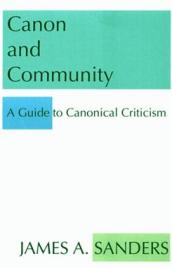
In his book, Canon and Community: A Guide to Canonical Community, James Sanders has this wondergful phrase:

The same Word of God which comforts the afflicted may also afflict the comfortable.

However you frame it, the Bible has a profound interest in issues of poverty and justice. Richard Bauckham, for example, talks of  the “downward movement of solidarity with the people at the bottom of the social scale of importance and wealth”.

How might the Word of God be comforting us today?

How might the Word of God be afflicting us today?

How might the Word of God be moving us beyond ourselves to consider and engage in the plight and powerlessness of others?

A missional reading of Genesis ch1 v1

Noone I have come across writes as consistently as Brian Russell on the application of a missional hermeneutic to biblical texts. He recently posted some really interesting thoughts on the missional significance of the opening verse of the Bible. Here are some snippets:

Genesis 1:1 is crucial for a couple of reasons. First, it affirms that there is an active personal deity behind all that is. The creation is not the result of an impersonal force or forces. It is not an accident or the result of some cosmic battle between gods. God (Heb elohim) will later be identified specifically as Israel’s covenant God known as the LORD (Heb Yhwh). Second, though Genesis 1:1-2:3 explicitly challenges the theology of the creation stories of Israel’s neighbors, it remains staunchly international in focus and in scope. It is vital to make the simple observation that Israel’s Scripture opens with its more generic name for God (Heb elohim)… It is not until Genesis 2:4 that the reader of the Bible encounters God’s personal and relational name—Yahweh (typically rendered LORD in our English translations). There the form is Yahweh Elohim (the LORD God). In other words, Genesis 2:4 links explicitly elohim of Genesis 1:1 with the personal name of Israel’s God that was revealed to Moses at the time of the Exodus (Exodus 3 and 6). Why is this important? I think that it points to the missional intent of the Scriptures…

Read the full post.

2010 Redcliffe lecture in Bible and Mission – Gordon Wenham on the Psalms

Prof Gordon WenhamI’m pleased to announce that this year’s Redcliffe Lecture in Bible and Mission will be on Wed 12 May and delivered by Prof Gordon Wenham who will be speaking on the theme of ‘The Nations in the Psalms’.

As you will see from the blurb below from Redcliffe’s website, the evening will also incorporate the public launch of the Centre. Similar to last year’s lecture by Chris Wright, the event will form the basis of a Bible and Mission issue of Encounters Mission journal, which will be out in early June.

Watch this space for updates. Here are the details so far:

Redcliffe Lecture in Bible and Mission:

The Nations in the Psalms

With Prof Gordon Wenham, Tutor in Old Testament at Trinity College, Bristol

Wednesday 12 May 2010
7.00pm to 9.00pm

In partnership with Bible Society and Wycliffe Bible Translators.

The 2010 lecture in Bible and Mission will be delivered by world-renowned biblical scholar Prof Gordon Wenham on the topic ‘The Nations in the Psalms’.

Even on a superfical reading of the Psalms, we come across a diversity of ideas regarding ‘the nations’:

Why do the nations rage and the peoples plot in vain? (2:1, ESV)
let the nations be judged before you! (9:19)
God reigns over the nations (47:8)
Let the nations be glad and sing for joy (67:4)
Declare his glory among the nations (96:3)
Praise the LORD, all nations! (117:1)

How then are we to understand the complex relationships between Israel, the nations and God? And what insights for mission might we gain from these and other texts in the Psalms?

After Prof Wenham’s lecture a ‘missional response’ will be offered by Tim Davy, lecturer in Biblical Studies and Director of the Centre for the Study of Bible and Mission.

Launch of the Centre for the Study of Bible and Mission

The evening will also incorporate the public launch of an exciting new Redcliffe initiative. The Centre for the Study of Bible and Mission aims to serve the Church by engaging in research, teaching, writing and speaking on mission in the Bible, and the Bible in mission thinking, practice and training. Its goal is to encourage Christians to reflect on mission biblically and the Bible missionally.

Prof Gordon Wenham is tutor in Old Testament at Trinity College, Bristol. Prior to this he was Professor of Old Testament at the University of Gloucestershire. He has held teaching positions or served as visiting lecturer at a range of institutions around the world. He is the author of numerous publications and combines scholarly excellence with clarity and accessibility. His main research interests are the Pentateuch, the Bible and Ethics, and the Psalms.

Book now
The lecture is free but pre-booking is required. To book your place, contact events@redcliffe.org.

Community day in the Psalms

Recently we held a community reflection day focusing on the book of Psalms. A news item was posted about it on Redcliffe’s website today. Here’s what it says:
Community day in the Psalms

The Redcliffe community recently enjoyed a reflection day in which we immersed ourselves in the book of Psalms. The aim of this special day was to allow students and staff the opportunity to take some time out with God, both corporately and individually.

The day started all together with singing, prayer and a talk on ‘Living and Praying the Psalms in Community’, given by Tim Davy, lecturer in Biblical Studies and Director of a new Redcliffe initiative, the Centre for the Study of Bible and Mission. Tim’s main points were that the book of Psalms teaches us to pray, teaches us to pray our true selves, and teaches us to pray beyond ourselves. Therefore it is immensely important for the people of God as we participate in God’s mission in the world.

This was followed by seminars on different aspects of the Psalms, such as a guided meditation and a session on Psalms and the emotions. There was also time and space to be with God as well as the opportunity to get creative in a variety of ways including painting and poetry.

Commenting on the day, Tim says, “This kind of day is a valuable part of our students’ preparation for cross-cultural ministry. It is vital that they become practiced in immersing themselves in the Word of God, and engaging with God through that.”

Tom Wright on Biblefresh, the Bible and mission

At a recent event in Durham to launch the Biblefresh initiative, Tom Wright gave a talk on ‘World-changing Bible readers’. It is available on Slipstream’s website.
Here’s a quote:

The Bible is the book that reminds us who we are and what we’re here for. We are the people of God for the world. We are the people charged with taking forward the mission of God, the work of Christ, in the power of the Spirit for the world. This is a mission-shaped Bible reading, if you like. The mission of the Church grows directly out of the narrative of Scripture and the narrative of Scripture which runs from creation to new creation is a narrative which catches us up, shows us where we are within it and tells us what we are there for.

Prosperity, suffering and mission

As part of my role with the Centre for the Study of Bible and Mission I sometimes contribute one-off sessions in other lecturers’ courses. Students on our MA in Global Issues in Contemporary Mission have the option to take a class in ‘Prosperity Theology and Suffering’. ‘Prosperity’ or ‘Faith teaching’ is widespread around the globe and so it is vital to understand how to respond to it. This module offers a critique of ‘Health and Wealth’ theology and explores the complex problem of suffering and theodicy. These are profoundly missional issues.

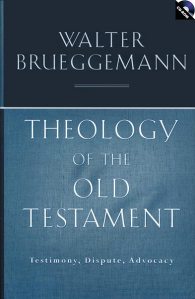
My session this week was to look at biblical perspectives on suffering. Our key preparatory reading was W. Brueggemann’s chapter, ‘Yahweh and Negativity’ in his Theology of the Old Testament: Testimony, Dispute, Advocacy, and L. Waters’ ‘Missio Dei and Suffering: Missiological Principles Related to the Believer’s Suffering’ in F. Tan (ed.), Connected for Christ (also appearing in Bibliotheca Sacra 166, 661 (2009), 19-34).

Brueggemann is, as ever, stimulating, exciting, frustrating, controversial and everything in between! Waters’ provides a rather different angle but is helpful in discussing the question of whether and how suffering might in some way further the mission of God (Antony Billington posted on Waters’ paper recently).

Both writers deal with suffering in the context of the book of Job. It seems to me that faith teaching, as far as I am aware, does not engage adequately with the book of Job. After all one of the main points of Job is to dismantle a mechanical belief in the relationship between sin and suffering. Prosperity teaching is profoundly unhelpful for a variety of reasons but one of the main things is that it does not have room for suffering, and so loads guilt on top of everything a person is going through.

These are not easy issues but they are universal. If we as the people of God are seeking to share the true rendering of God and reality, then surely we should be able to address the questions that arise when suffering comes. It is not that there are easy answers; but at least there should be space to discuss it. I’m glad the book of Job is in the Bible.

The Gospel Among the Nations

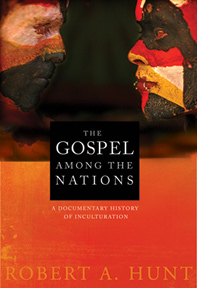
This is the title of a forthcoming book I came across today, which will be published at the end of June. The Gospel Among the Nations: A Documentary History of Inculturation by Robert A. Hunt looks like it will be a very helpful reference work for those thinking through the crucial issue of how Christians might engage cross-culturally with the Gospel. Obviously I’ve not had a chance to read the book yet but I imagine it is likely to make its way onto the bibliography of the ‘Bible Engagement in Intercultural Contexts’ module of our new MA in Bible and Mission.

Here’s the publisher blurb:

Offers the most comprehensive collection available of original texts illustrating how Christians throughout the ages have struggled to inculturate the gospel.

The Gospel Among the Nations brings together in a single volume the most important primary documents illustrating how Christians have dealt with the most fundamental issue of the church’s mission: how to translate the gospel in new cultural settings.The texts range from Pope Gregory’s famous instructions to Augustine of Canterbury on his mission to England, to W. E. Hocking’s fateful “Attitudes toward People of Other Faiths.”

Beginning with a masterful introduction to the theme, Robert Hunt assembles scores of texts that reveal the way that missionaries, church leaders, and local Christians have contributed to the extension of Christianity over two millennia, and thus made it truly a world religion. The Gospel Among the Nations is an essential resource for students, researchers and practitioners in world Christian history and mission studies.

Robert A. Hunt is director of global theological education at Perkins School of Theology, Southern Methodist University, Dallas,Texas. He is a past president of the Association of Professors of Mission and a member of the American Society of Missiology’s Renewal and Strategic Planning task force.