The Bible as comfort and affliction

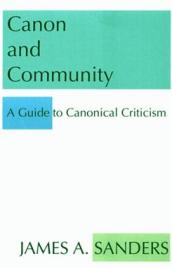
In his book, Canon and Community: A Guide to Canonical Community, James Sanders has this wondergful phrase:

The same Word of God which comforts the afflicted may also afflict the comfortable.

However you frame it, the Bible has a profound interest in issues of poverty and justice. Richard Bauckham, for example, talks of  the “downward movement of solidarity with the people at the bottom of the social scale of importance and wealth”.

How might the Word of God be comforting us today?

How might the Word of God be afflicting us today?

How might the Word of God be moving us beyond ourselves to consider and engage in the plight and powerlessness of others?

A missional reading of Genesis ch1 v1

Noone I have come across writes as consistently as Brian Russell on the application of a missional hermeneutic to biblical texts. He recently posted some really interesting thoughts on the missional significance of the opening verse of the Bible. Here are some snippets:

Genesis 1:1 is crucial for a couple of reasons. First, it affirms that there is an active personal deity behind all that is. The creation is not the result of an impersonal force or forces. It is not an accident or the result of some cosmic battle between gods. God (Heb elohim) will later be identified specifically as Israel’s covenant God known as the LORD (Heb Yhwh). Second, though Genesis 1:1-2:3 explicitly challenges the theology of the creation stories of Israel’s neighbors, it remains staunchly international in focus and in scope. It is vital to make the simple observation that Israel’s Scripture opens with its more generic name for God (Heb elohim)… It is not until Genesis 2:4 that the reader of the Bible encounters God’s personal and relational name—Yahweh (typically rendered LORD in our English translations). There the form is Yahweh Elohim (the LORD God). In other words, Genesis 2:4 links explicitly elohim of Genesis 1:1 with the personal name of Israel’s God that was revealed to Moses at the time of the Exodus (Exodus 3 and 6). Why is this important? I think that it points to the missional intent of the Scriptures…

Read the full post.

2010 Redcliffe lecture in Bible and Mission – Gordon Wenham on the Psalms

Prof Gordon WenhamI’m pleased to announce that this year’s Redcliffe Lecture in Bible and Mission will be on Wed 12 May and delivered by Prof Gordon Wenham who will be speaking on the theme of ‘The Nations in the Psalms’.

As you will see from the blurb below from Redcliffe’s website, the evening will also incorporate the public launch of the Centre. Similar to last year’s lecture by Chris Wright, the event will form the basis of a Bible and Mission issue of Encounters Mission journal, which will be out in early June.

Watch this space for updates. Here are the details so far:

Redcliffe Lecture in Bible and Mission:

The Nations in the Psalms

With Prof Gordon Wenham, Tutor in Old Testament at Trinity College, Bristol

Wednesday 12 May 2010
7.00pm to 9.00pm

In partnership with Bible Society and Wycliffe Bible Translators.

The 2010 lecture in Bible and Mission will be delivered by world-renowned biblical scholar Prof Gordon Wenham on the topic ‘The Nations in the Psalms’.

Even on a superfical reading of the Psalms, we come across a diversity of ideas regarding ‘the nations’:

Why do the nations rage and the peoples plot in vain? (2:1, ESV)
let the nations be judged before you! (9:19)
God reigns over the nations (47:8)
Let the nations be glad and sing for joy (67:4)
Declare his glory among the nations (96:3)
Praise the LORD, all nations! (117:1)

How then are we to understand the complex relationships between Israel, the nations and God? And what insights for mission might we gain from these and other texts in the Psalms?

After Prof Wenham’s lecture a ‘missional response’ will be offered by Tim Davy, lecturer in Biblical Studies and Director of the Centre for the Study of Bible and Mission.

Launch of the Centre for the Study of Bible and Mission

The evening will also incorporate the public launch of an exciting new Redcliffe initiative. The Centre for the Study of Bible and Mission aims to serve the Church by engaging in research, teaching, writing and speaking on mission in the Bible, and the Bible in mission thinking, practice and training. Its goal is to encourage Christians to reflect on mission biblically and the Bible missionally.

Prof Gordon Wenham is tutor in Old Testament at Trinity College, Bristol. Prior to this he was Professor of Old Testament at the University of Gloucestershire. He has held teaching positions or served as visiting lecturer at a range of institutions around the world. He is the author of numerous publications and combines scholarly excellence with clarity and accessibility. His main research interests are the Pentateuch, the Bible and Ethics, and the Psalms.

Book now
The lecture is free but pre-booking is required. To book your place, contact events@redcliffe.org.
Community day in the Psalms

Recently we held a community reflection day focusing on the book of Psalms. A news item was posted about it on Redcliffe’s website today. Here’s what it says:
Community day in the Psalms

The Redcliffe community recently enjoyed a reflection day in which we immersed ourselves in the book of Psalms. The aim of this special day was to allow students and staff the opportunity to take some time out with God, both corporately and individually.

The day started all together with singing, prayer and a talk on ‘Living and Praying the Psalms in Community’, given by Tim Davy, lecturer in Biblical Studies and Director of a new Redcliffe initiative, the Centre for the Study of Bible and Mission. Tim’s main points were that the book of Psalms teaches us to pray, teaches us to pray our true selves, and teaches us to pray beyond ourselves. Therefore it is immensely important for the people of God as we participate in God’s mission in the world.

This was followed by seminars on different aspects of the Psalms, such as a guided meditation and a session on Psalms and the emotions. There was also time and space to be with God as well as the opportunity to get creative in a variety of ways including painting and poetry.

Commenting on the day, Tim says, “This kind of day is a valuable part of our students’ preparation for cross-cultural ministry. It is vital that they become practiced in immersing themselves in the Word of God, and engaging with God through that.”

Tom Wright on Biblefresh, the Bible and mission

At a recent event in Durham to launch the Biblefresh initiative, Tom Wright gave a talk on ‘World-changing Bible readers’. It is available on Slipstream’s website.
Here’s a quote:

The Bible is the book that reminds us who we are and what we’re here for. We are the people of God for the world. We are the people charged with taking forward the mission of God, the work of Christ, in the power of the Spirit for the world. This is a mission-shaped Bible reading, if you like. The mission of the Church grows directly out of the narrative of Scripture and the narrative of Scripture which runs from creation to new creation is a narrative which catches us up, shows us where we are within it and tells us what we are there for.

Prosperity, suffering and mission

As part of my role with the Centre for the Study of Bible and Mission I sometimes contribute one-off sessions in other lecturers’ courses. Students on our MA in Global Issues in Contemporary Mission have the option to take a class in ‘Prosperity Theology and Suffering’. ‘Prosperity’ or ‘Faith teaching’ is widespread around the globe and so it is vital to understand how to respond to it. This module offers a critique of ‘Health and Wealth’ theology and explores the complex problem of suffering and theodicy. These are profoundly missional issues.

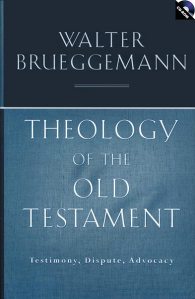
My session this week was to look at biblical perspectives on suffering. Our key preparatory reading was W. Brueggemann’s chapter, ‘Yahweh and Negativity’ in his Theology of the Old Testament: Testimony, Dispute, Advocacy, and L. Waters’ ‘Missio Dei and Suffering: Missiological Principles Related to the Believer’s Suffering’ in F. Tan (ed.), Connected for Christ (also appearing in Bibliotheca Sacra 166, 661 (2009), 19-34).

Brueggemann is, as ever, stimulating, exciting, frustrating, controversial and everything in between! Waters’ provides a rather different angle but is helpful in discussing the question of whether and how suffering might in some way further the mission of God (Antony Billington posted on Waters’ paper recently).

Both writers deal with suffering in the context of the book of Job. It seems to me that faith teaching, as far as I am aware, does not engage adequately with the book of Job. After all one of the main points of Job is to dismantle a mechanical belief in the relationship between sin and suffering. Prosperity teaching is profoundly unhelpful for a variety of reasons but one of the main things is that it does not have room for suffering, and so loads guilt on top of everything a person is going through.

These are not easy issues but they are universal. If we as the people of God are seeking to share the true rendering of God and reality, then surely we should be able to address the questions that arise when suffering comes. It is not that there are easy answers; but at least there should be space to discuss it. I’m glad the book of Job is in the Bible.

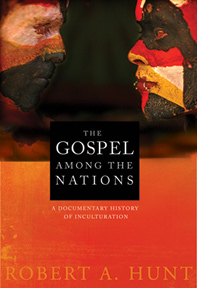
The Gospel Among the Nations

This is the title of a forthcoming book I came across today, which will be published at the end of June. The Gospel Among the Nations: A Documentary History of Inculturation by Robert A. Hunt looks like it will be a very helpful reference work for those thinking through the crucial issue of how Christians might engage cross-culturally with the Gospel. Obviously I’ve not had a chance to read the book yet but I imagine it is likely to make its way onto the bibliography of the ‘Bible Engagement in Intercultural Contexts’ module of our new MA in Bible and Mission.

Here’s the publisher blurb:

Offers the most comprehensive collection available of original texts illustrating how Christians throughout the ages have struggled to inculturate the gospel.

The Gospel Among the Nations brings together in a single volume the most important primary documents illustrating how Christians have dealt with the most fundamental issue of the church’s mission: how to translate the gospel in new cultural settings.The texts range from Pope Gregory’s famous instructions to Augustine of Canterbury on his mission to England, to W. E. Hocking’s fateful “Attitudes toward People of Other Faiths.”

Beginning with a masterful introduction to the theme, Robert Hunt assembles scores of texts that reveal the way that missionaries, church leaders, and local Christians have contributed to the extension of Christianity over two millennia, and thus made it truly a world religion. The Gospel Among the Nations is an essential resource for students, researchers and practitioners in world Christian history and mission studies.

Robert A. Hunt is director of global theological education at Perkins School of Theology, Southern Methodist University, Dallas,Texas. He is a past president of the Association of Professors of Mission and a member of the American Society of Missiology’s Renewal and Strategic Planning task force.

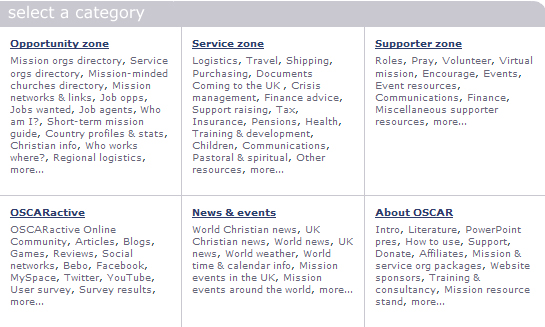
OSCAR celebrates 10th birthday

OSCAR, the online UK information service for world mission, is celebrating its 10th birthday today. Based at Redcliffe College, it’s a phenomenal resource for anyone interested or involved in mission.

To get an idea of the sorts of things they cover have a look at this snapshot:

Happy birthday OSCAR, and thanks so much for all you do to resource mission. It’s a privilege to work alongside you here at Redcliffe!

What does the Bible say about power?

This is the title of a Lent series put on in partnership between the Methodist Relief and Development Fund and the Evangelical Alliance.

The attainment and abuse of power has not, to my knowledge, always been a prominent theme in scholarship. Is this because those with power tend not to think about it, in the same way as those with money tend not to think that money is not an issue?

Three books among many that deal with the issue are Mary Evans commentary on 1 & 2 Samuel in the NIBC series; Dewi Hughes’ Power and Poverty: Divine and Human Rule in a World of Need; and my doctoral supervisor Gordon McConville’s God and Earthly Power: An Old Testament Political Theology, Genesis-Kings.

Here’s the blurb for the MRDF series:

Power – we have more of it than we think.

Poverty robs people of much more than food, clean water and access to education – it robs them of the power to control their lives.
The Bible has a lot to say about the uses and abuses of power. This study pack draws on examples from scripture and the contemporary world to explore the nature of power; and challenges us to think about the power we have and how we can use it.
 
The six-part course includes:
  • in-depth Bible studies
  • modern day examples of empowerment from MRDF’s work
  • engaging group discussions
  • ideas for individual and group action

For more details, as well as downloads and links, visit the MRDF website.

Bible reading in Italy

Interesting story on the nova research centre website about the reading habits of Italians, which came out of a survey done by Eurisko for the Catholic Biblical Federation and raises a number of missiological issues. See, for example, this quote:

despite the fact that the 40 years following Vatican II have seen a steady increase in the number of homes possessing a Bible and the onset of the Internet age and multimedia communication, for many Italians the Bible remains a closed, mysterious book.

nova also mentions the XII Ordinary General Assembly of the Synod of Bishops, which was held in October 2008 with the theme, “The Word of God in the Life and Mission of the Church”. Here is a link to a particularly relevant part of the report on the Vatican’s website.

nova is based at Redcliffe and researches mission in Europe in order to innovate mission in Europe. It’s a fantastic resource doing excellent work. If you’ve any interest in thinking about or doing mission in a European context have a look at the nova website.