Reckoning with our already sentness

What would happen if you and I grasped – really grasped – our ‘already sentness’? How would our lives and churches be different if we all saw ourselves as joining in with God’s mission?

This is something we discussed at length in yesterday’s first Biblical Basis of Mission class. We used this quote from Chris Wright as a stimulus:

It is not so much, as someone has said, that God has a mission for his church in the world, as that God has a church for his mission in the world. Mission is not just something we do (though it certainly includes that). Mission, from the point of view of our human endeavour, means the committed participation of God’s people in the purposes of God for the redemption of the whole creation.
(in Truth with a Mission: Reading Scripture Missiologically, p14)

For a start I would like to think that a wholesale reckoning with our already sentness would break down the unhelpful and unbiblical perceptions of ‘missionaries’ being on another plane of spirituality (nb. this is just as unhelpful for them as it is for those at home. Question: how do we honour those working cross-culturally without these unhelpful connotations?)

Would reckoning with our already sentness affect how mission was done in the local church? Would it give us more energy, more outward focus, more confidence that God is at work and we are joining with him in what he is doing?

What difference would it make to you to reckon with your already sentness? Let us know by leaving a comment.

Servanthood and other metaphors we teach by

What images do I use, consciously or unconsciously, to understand my role as a tutor here at Redcliffe? I’ve posted before on the power and presence of metaphors in life, leadership and mission: Bible, mission and metaphor & Metaphors we lead by.

Along with most faculty colleagues, my office is in the top floor of the main part of Redcliffe’s building: picture sloping ceilings and fantastic views of the grounds.

But here’s the thing I love about being here: in days gone by these rooms would have been the servants’ quarters for the staff of the family who lived here. How appropriate!

There are many images that depict our role as tutors: teacher, mentor, friend, advisor, team member, leader, listener… But servant is one of the core metaphors for what we do.

With new students arriving tomorrow, it’s good to be reminded of this.

Missiology journal focuses on orality

Engaging people with the Bible is often a challenge but what about when working in the context of an oral culture? This is a huge issue in Bible and mission so any good reflection on the topic is to be warmly welcomed.

The theme of the April 2010 (vol. XXXVIII:2) issue of the journal Missiology: An International Review is ‘orality’. Here’s the contents:

Translation and the Visual Predicament of the “JESUS” Film in West Africa – Johannes Merz
Focusing on analysis of the “JESUS” film, this article shows that much more is communicated through a film’s cinematography than through its spoken message.

Discipling through the Eyes of Oral Learners – W. Jay Moon
By viewing a funeral through the eyes of an oral people, this article describes oral learning preferences, in order to reveal effective and transformative discipling practices.

Pedagogical Conversions: From Propositions to Story and Symbol – Tom Steffen
While living among the Ifugao people, the author discovers the multiple and integrative roles that stories and symbols play in communication.

Telling Our Stories Well: Creating Memorable Images and Shaping Our Identity – Janet Stahl
This article claims that wisdom gleaned from ancient practices reveals a place in storytelling both for recitation of Scriptural texts and for more creatively crafted techniques.

Bible Translation as Contextualization: The Role of Orality – James Maxey
Bible Translation is actually contextual theologizing in which local host communities demonstrate their appropriation and proclamation of the Bible in their own languages.

Matters of the Heart: Orality, Story and Cultural Transformation—The Critical Role of Storytelling in Affecting Worldview – A. Steven Evans
With storytelling in particular as a catalyst, worldviews, cultures, and values can change, resulting in the transformation of an individual’s life and of an entire culture as well.

Coming to Terms with Orality: A Holistic Model – Charles Madinger
A holistic approach to orality incorporates seven converging disciplines, which, when more fully incorporated, can increase the transformative power of a message.

Mission in Robin Routledge’s Old Testament Theology

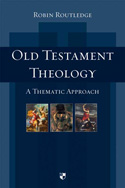
Like many Old Testament Theologies (e.g., Brueggemann, Preuss, Goldingay) Robin Routledge’s Old Testament Theology: A Thematic Approach contains a chapter on the nations.

As it came out in 2008 Routledge notes works such as Chris Wright’s The Mission of God and James Okoye’s Israel and the Nations (both published in 2006).

It would make an interesting study to look at how different OT theologies deal with the ‘nations’ or ‘mission’ question. Why, for example, do the chapters tend (but not always) to be at the end of the book? Could this be read as the nations as an afterthought? What, I wonder, would an Old Testament Theology look like if a treatment of the nations came first?

Anyway, in the meantime, here’s a breakdown of Routledge’s chapter on ‘God and the Nations (ch. 10, pp. 334). (nb. He has also contributed a very helpful chapter on ‘Mission and Covenant in the Old Testament’ in Bible and Mission: A Conversation Between Biblical Studies and Missiology – see my review in Redcliffe’s mission journal, Encounters).

God and history
– The divine purpose in history
– God and non-Israelite nations (Condemnation of national pride; Oracles against the nations; Divine guidance of national destinies)

Salvation for all nations
– Mission in the Old Testament
– God’s universal covenant
– Mission: at the heart of a narrative substructure of the Old Testament
– Universalism (Israel as witness to the nations, Israel and the nations: equal partners in salvation?)

Bible and Mission in Edinburgh 2010 Fresh Perspectives on Christian Mission

The Centre has contributed to a newly published book Edinburgh 2010: Fresh Perspectives on Christian Mission. The volume is edited by Kenneth Ross and develops the seven ‘transversal’ themes of the Edinburgh 2010 conference with case studies and vignettes (the themes being: One Church, Many Contexts; Bible and Mission; Women and Mission; Youth and Mission; The View from the Margins; Ecological Perspectives; and Reconcilion and Healing).

My contribution is a short case study on ‘Teaching the Bible and Mission’ in which I give three snapshots from some lectures at Redcliffe. The material is based on blog posts on the Slave girl in 2 Kings 5; the wonderful passage Deut. 10:12-22; and Mark’s gospel.

Here’s the introductory paragraph from the Bible and Mission chapter and a breakdown of the chapter’s contents:

The Christian faith has a foundational text: the Bible. The reading, interpreting and dissemination of this text lie at the core of the missionary task. In this chapter a number of contributors reflect on aspects of the interplay between Bible and mission.

The Role of the Bible Societies in Christian Mission – Fergus Macdonald and Bill Mitchell
Richness in the Biblical Witness – Daniel Patte
Creative Tensions in the Biblical Witness – Marie-Hélène Robert and Jacques Matthey
Teaching Bible and Mission – Tim Davy
The Bible: The Source of Life and Soul of Mission – Bill Mitchell

Jason Bourne, Luke 24 and our place in the mission of God

This was the title of a sermon I preached at Kendal Road Baptist Church last Sunday. Here are some points:

We all live within stories. If you’re a fan of the Jason Bourne trilogy you’ll have been absorbed by his story as he gradually discovers the truth of his identity, what he has done, what has been done to him, and how he resolves these things.

The three films, The Bourne Identity, The Bourne Supremacy, and The Bourne Ultimatum came out between 2002 and 2007 so we had to wait 5 years to find out the conclusion to his story. I remember coming out of the cinema after the final instalment, having witness the resolution of Jason Bourne’s story, and wondering to myself, ‘What story am I part of and how does my life fit into it?’

This is something we should be asking as a church: What is our ultimate purpose and identity? Who are we and what are we about? How do our activities relate to who we are and what we are here for?

The disciples thought they had lost their story – that they were ‘storyless’ – following the death of Jesus: ‘”He was a prophet, powerful in word and deed before God and all the people. 20 The chief priests and our rulers handed him over to be sentenced to death, and they crucified him; 21 but we had hoped that he was the one who was going to redeem Israel.’ (Luke 24:19b-21, NIV)

Jesus’ death was not part of the plan; it was not part of the big story of God’s purposes as they understood it. But a little later on we read that Jesus, raised from the dead, visits his storyless disciples…

44 He said to them, “This is what I told you while I was still with you: Everything must be fulfilled that is written about me in the Law of Moses, the Prophets and the Psalms.”

 45 Then he opened their minds so they could understand the Scriptures. 46 He told them, “This is what is written: The Christ will suffer and rise from the dead on the third day, 47 and repentance and forgiveness of sins will be preached in his name to all nations, beginning at Jerusalem. 48You are witnesses of these things. 49 I am going to send you what my Father has promised; but stay in the city until you have been clothed with power from on high.” (Luke 24:44-49, NIV)

Notice how Jesus tells them the real story; they had misunderstood the story – as Jesus recounts what their Scriptures said he makes two points:

  • 1. The Old Testament (i.e., their Scriptures) had to be read through a messiah lens – the Christ/Messiah God’s deliverer would indeed achieve God’s purposes but through his death and resurrection
  • 2. The Old Testament (i.e., their Scriptures) had to be read through a mission lens – notice how the death and resurrection of God’s deliverer leads to the telling of God’s message of repentance and forgiveness to all nations

Jesus understood the Bible as portraying the big story of God’s mission of reconciling this broken world to himself, a story that reached its climax in the death and resurrection of Jesus. From Genesis to Revelation, the Bible tells us about God’s mission. Mission, you see is not primarily something you and I do; first and foremost, mission is God’s activity. God has set about to reconcile humanity and all of creation to himself and he calls his people to participate with him.

This mission, therefore, defines who we are as a church. Let me give you two quotes I have found really helpful in reorienting myself to this story:

“It is not so much the case that God has a mission for his church in the world but that God has a church for his mission in the world.”

Or to put this another way,

‘It is not so much that God has a mission for Kendal Road Baptist Church in Longlevens and beyond, but that God has Kendal Road Baptist Church for his mission in Longlevens and beyond.’

‘We ask, ‘Where does God fit into the story of my life?’ when the real question is where does my little life fit into this great story of God’s mission?’ or put another way, ‘I may wonder what kind of mission God has for me, when I should be asking what kind of me God wants for his mission.’

This means, returning to the language of the Bourne trilogy:

  • Mission Identity – mission is not just something we do, or something some of us do; mission defines who we are
  • Mission Supremacy – because mission defines our identity it should also shape our activities; how do we as a church community fit into God’s mission to bless and reconcile those in Longlevens and beyond to himself
  • Mission Ultimatum – are you willing to recognise your place, our place, in God’s big story?

Obviously, I am indebted to Chris Wright for a lot of this material, particularly the use of Luke 24 and the quotes.

If you want to listen to the sermon it will be available for a few weeks on Kendal Road’s website (link on the left hand side of the home page)
Evangelical Review of Theology issue on The Whole World

The July 2010 issue of the Evangelical Review of Theology (Vol 34, No 3) contains a number of articles relating to the Bible and mission.
It is given over to papers and case studies to come out of the third consultation of the Lausanne Theology Working Group, chaired by Chris Wright. Here’s the contents of the issue:

Editoral – Christopher J.H. Wright

The Whole World: Statement of the Lausanne Theology Working Group, Beirut 2010 – Christopher J.H. Wright

The World in the Bible – Christopher J.H. Wright

Towards a Missiology of Caring for Creation – Peter Harris

The Global Public Square – Vinoth Ramachandra

Can Christians Belong to More than One Religious Tradition?

Case Studies:

Peacemaking amidst urban violence in Brazil – C. Rosalee Velloso Ewell (Brazil)

The gospel amidst ethnic violence in Berundi – Emmanuel Ndikumana (Berundi)

The world threat of nuclear weapons, and the church’s role – Tyler Wigg-Stevenson (USA)

eVangelism: The gospel and the world of the internet – Rob Haskell (USA)

The separation of beliefs and religion in Europe – Birger Nygaard (Denmark)

July 2010 issue of Transformation journal

The July edition of Transformation includes two articles on a Bible and mission theme.

Jesus and the Spirits: What Can We Learn from the New Testament World? by Craig A. Evans

Abstract
The present study explores in what ways the name of Jesus was invoked by Pagans, Jews, and Christians. It is shown that in contrast to famous worthies of the past, such as Solomon and the patriarchs, whose reputations grew over the centuries, the name of Jesus was invoked during his public ministry and continued for centuries following the Easter proclamation. Besides important texts, the artifactual evidence is also examined.

Transformation, Proclamation and Mission in the New Testament: Examining the Case of 1 Peter by Stephen Ayodeji A. Fagbemi

Abstract
How is the NT concept of mission to be understood in relation to proclamation and transformation? Or in what ways do transformation, proclamation and mission interact in the New Testament? Although 1 Peter does not speak overtly of mission, the interaction between proclamation and transformation would give an indication of the presence of mission. Looking specifically at the First Letter of Peter, this paper seeks to examine how the interaction of these three subjects might inform another way not only of understanding mission but also of doing it. Within its own context, 1 Peter offers a particularly vital and insightful dimension on this subject.

Encounters mission journal issue on The Psalms and Mission

The latest edition of Redcliffe’s free, online journal, ‘Encounters’, is on the theme of The Psalms and Mission. It was edited by myself and features a range of articles on the relationship between the Psalter and mission.

Here’s my introduction and the contents:

12 May 2010 saw the public launch of the Centre for the Study of Bible and Mission, a new Redcliffe College initiative aiming to serve the Church by engaging in research, teaching, writing and speaking on mission in the Bible, and the Bible in mission thinking, practice and training.

In my editorial I outline the activities of the Centre in more detail, one of which is to produce an annual issue of Encounters on a Bible and mission theme. This current edition focuses on The Psalms and Mission. The launch event also included Redcliffe’s 2010 Annual Lecture in Bible and Mission, delivered by Prof. Gordon Wenham on the theme of ‘The Nations in the Psalms’. The lecture is provided in full along with responses from myself, Eddie Arthur (Wycliffe Bible Translators) and David Spriggs (Bible Society).

Brian Russell and Tony Hughes outline missional readings of particular psalms, and a Redcliffe student offers a fascinating vision for the use of psalms of lament in order to help prevent missionary attrition. Finally, with kind permission from the author and Paternoster Press, we have included Ian Stackhouse’s chapter on Praying the Psalms from his book, The Day is Yours: Slow Spirituality in a Fast-Moving World.

I trust you will enjoy this edition of Encounters. Please read, reflect and join in the conversation.

Tim

Tim Davy teaches Biblical Studies and is Director of the Centre for the Study of Bible and Mission at Redcliffe College. He writes the Bible and Mission blog and also edited issues 17 and 29 of Encounters on the themes of Mission and the Old Testament and The Bible and Mission.

——————————————————————————-

Editorial:  The Centre for the Study of Bible and Mission. (Tim Davy, 761 words)

Article 1:  The Nations in the Psalms. (Prof Gordon Wenham, 5513 words

Article 2:  The Nations in the Psalms and the Psalms in the Nations – a response. (Tim Davy, 912 words)

Article 3:  Psalms 1-2 as an Introduction to Reading the Psalms Missionally. (Dr Brian Russell, 2083 words)

Article 4:  Reflections on the Nations in the Psalms. (Eddie Arthur, 485 words)

Article 5:  The Nations in Isaiah 40-55. (Rev Dr David Spriggs, 1218 words)

Article 6:  Missionary Attrition and the Psalms of Lament. (Name withheld, 1041 words)

Article 7:  A Missional Reading of Psalm 47. (Tony Hughes, 1664 words)

Article 8:  Praying the Psalms. (Rev Dr Ian Stackhouse, 2598 words)

Book Review 1:  Transformation after Lausanne: Radical Evangelical Mission in Global-local Perspective. (by Al Tizon; Regnum Books)

Book Review 2:  Understanding and Using the Bible. (edited by Christopher J.H. Wright and Jonathan Lamb; SPCK)

The url for the issue is http://www.redcliffe.org/psalmsandmission

Video introduction and prayer of dedication for the centre

Here’s a video clip from last month’s lauch of the Centre for the Study of Bible and Mission. I outline the aims, passions and activities of the Centre and then introduce David Spriggs of Bible Society who prays a prayer of dedication.

Introducing Redcliffe’s new Centre for the Study of Bible and Mission